
BMI Calculator
Calculate your Body Mass Index from height and weight, in metric or imperial.
Calculate Your BMI by Age, Height, and Weight
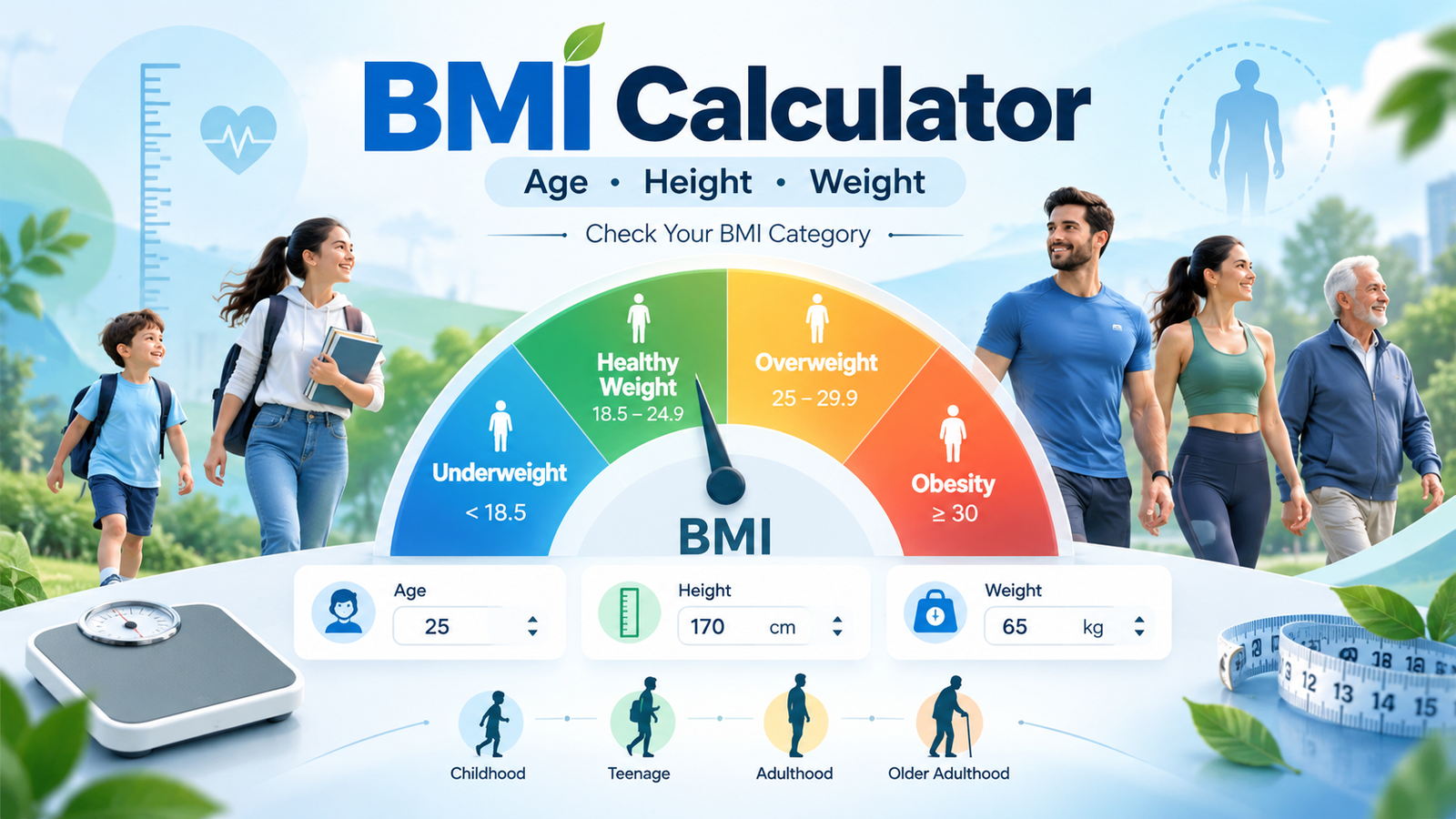
Use the BMI Calculator above to calculate your Body Mass Index (BMI) using your height and weight, identify your age group, and understand your BMI category with US or metric measurements.
What Is a BMI Calculator?
A BMI Calculator is an online tool that measures body weight relative to height. It helps classify BMI into four main categories: underweight, healthy weight, overweight, and obesity.
The Skills Elevate BMI Calculator also considers your age, allowing you to see the appropriate classification reference for childhood, teenage years, adulthood, or older adulthood.
BMI is a screening measurement, not a medical diagnosis.
How to Use the BMI Calculator
- Select units: Choose US units (feet, inches, pounds) or metric units (centimeters, kilograms).
- Enter your age: The calculator automatically identifies your life stage. For ages 2–19, select the appropriate boys' or girls' growth-chart reference.
- Enter your height: Provide your current height.
- Enter your weight: Enter your weight using the selected unit system.
- Calculate BMI: Click Calculate BMI to view your score and category.
- Explore details: Open the expandable section to view category comparisons and the calculation formula.
You can also copy your result or reset the calculator.
How Does the BMI Calculator Work?
The BMI formula compares weight with height squared.
Metric formula:
BMI = Weight (kg) ÷ Height (m)²
US formula:
BMI = (Weight in pounds × 703) ÷ Height in inches²
Example BMI Calculation
Suppose an adult has the following measurements:
- Age: 32 years
- Height: 5 feet 6 inches
- Weight: 165 pounds
First, convert height into inches:
5 × 12 + 6 = 66 inches
Now calculate:
BMI = (165 × 703) ÷ (66 × 66)
BMI = 26.6
This result falls within the standard adult overweight BMI category.
Important: Age does not change the BMI formula itself. Age determines which classification reference is appropriate.
BMI Calculator by Age Group
Our calculator automatically identifies four age groups.
| Age Group | Age Range | Reference |
|---|---|---|
| Childhood | 2–12 years | BMI-for-age percentiles |
| Teenage | 13–19 years | BMI-for-age percentiles |
| Adulthood | 20–64 years | Adult BMI categories |
| Older adulthood | 65+ years | Adult BMI categories with additional considerations |
BMI for Children
Children's bodies change rapidly as they grow. Their BMI must be interpreted using age- and sex-specific growth charts.
A child's BMI should not be classified using adult BMI thresholds.
BMI for Teenagers
Teenagers also require BMI-for-age percentile references because height, weight, and body composition change during adolescence.
BMI for Adults
Adults aged 20–64 generally use standard BMI classifications based on height and weight.
BMI for Older Adults
People aged 65 and older use the standard adult BMI categories, but muscle loss, nutrition, physical function, and other medical factors can affect interpretation.
Adult BMI Categories
| BMI Range | Category |
|---|---|
| Below 18.5 | Underweight |
| 18.5 to less than 25 | Healthy weight |
| 25 to less than 30 | Overweight |
| 30 to less than 35 | Obesity Class 1 |
| 35 to less than 40 | Obesity Class 2 |
| 40 or higher | Obesity Class 3 |
These classifications are screening categories and do not establish an individual's health status.
BMI Categories for Children and Teenagers
For ages 2–19, BMI categories use percentiles rather than adult BMI thresholds.
| BMI-for-Age Percentile | Category |
|---|---|
| Below 5th percentile | Underweight |
| 5th to less than 85th percentile | Healthy weight |
| 85th to less than 95th percentile | Overweight |
| 95th percentile or higher | Obesity |
The current Skills Elevate calculator estimates pediatric boundaries using interpolated yearly reference values. These are approximate comparisons, not exact official monthly percentile calculations. Results near category boundaries should be verified using official growth charts.
What Is a Healthy Weight for My Height?
For adults, BMI thresholds can be used to calculate weight intervals corresponding to different BMI categories.
The formula is:
Weight (kg) = BMI × Height (m)²
For example, an adult who is 170 cm tall has a standard healthy-BMI weight interval of approximately 53.5 kg to less than 72.3 kg.
However, this is only a BMI-based reference interval.
It does not represent a personalized ideal body weight. Weight needs and health circumstances differ between individuals.
For children and teenagers, BMI-based weight comparisons should not be used as weight goals because growth changes the reference over time.
How Accurate Is BMI?
BMI is useful for population studies and initial weight-status screening, but it has limitations.
It does not directly measure body fat, distinguish muscle from fat, or account fully for differences in body composition and fat distribution.
For example, a muscular adult may have a high BMI without having the same body-fat level as another person with a similar BMI.
BMI should therefore be considered alongside other health information rather than interpreted in isolation.
Common BMI Calculation Mistakes
- Entering the wrong height or weight units.
- Forgetting to convert centimeters into meters when calculating manually.
- Applying adult BMI thresholds to children.
- Treating BMI as a direct body-fat measurement.
- Assuming that a healthy BMI category guarantees good health.
- Treating BMI-based weight ranges as personalized ideal weights.
The calculator automates the formula and selects an age-appropriate comparison method, helping reduce common manual calculation errors.
Frequently Asked Questions
What is BMI?
BMI stands for Body Mass Index. It describes body weight relative to height and is commonly used for weight-status screening.
Does age affect BMI?
Age does not change the BMI formula, but it affects how results are classified. Children and teens require BMI-for-age references, while adults use standard BMI categories.
How do I calculate BMI using height and weight?
Divide weight in kilograms by height in meters squared, or use pounds and inches with the US BMI formula.
What is a healthy BMI for adults?
The standard adult healthy-weight BMI category is 18.5 to less than 25.
Is BMI different for men and women?
The standard adult BMI formula and category thresholds are the same. However, children's and teenagers' BMI-for-age references differ by age and growth-chart sex.
Can I calculate a child's BMI?
Yes, for ages 2–19. The calculator provides an approximate BMI-for-age category using the selected growth-chart reference. It should not replace official growth-chart assessment.
Does BMI measure body fat?
No. BMI estimates weight relative to height; it does not directly measure body fat.
What is a good BMI for someone over 65?
Standard adult BMI categories still apply, but interpretation should consider muscle mass, nutrition, physical function, and individual medical circumstances.
Can BMI tell me my ideal weight?
No. It can calculate weight intervals associated with BMI categories, but it cannot determine an individual's ideal weight.
Is the Skills Elevate BMI Calculator free?
Yes. You can use the calculator to check BMI, identify your life stage, and review category comparisons without charge.