
Density, Mass and Volume Formula How to Calculate Each One
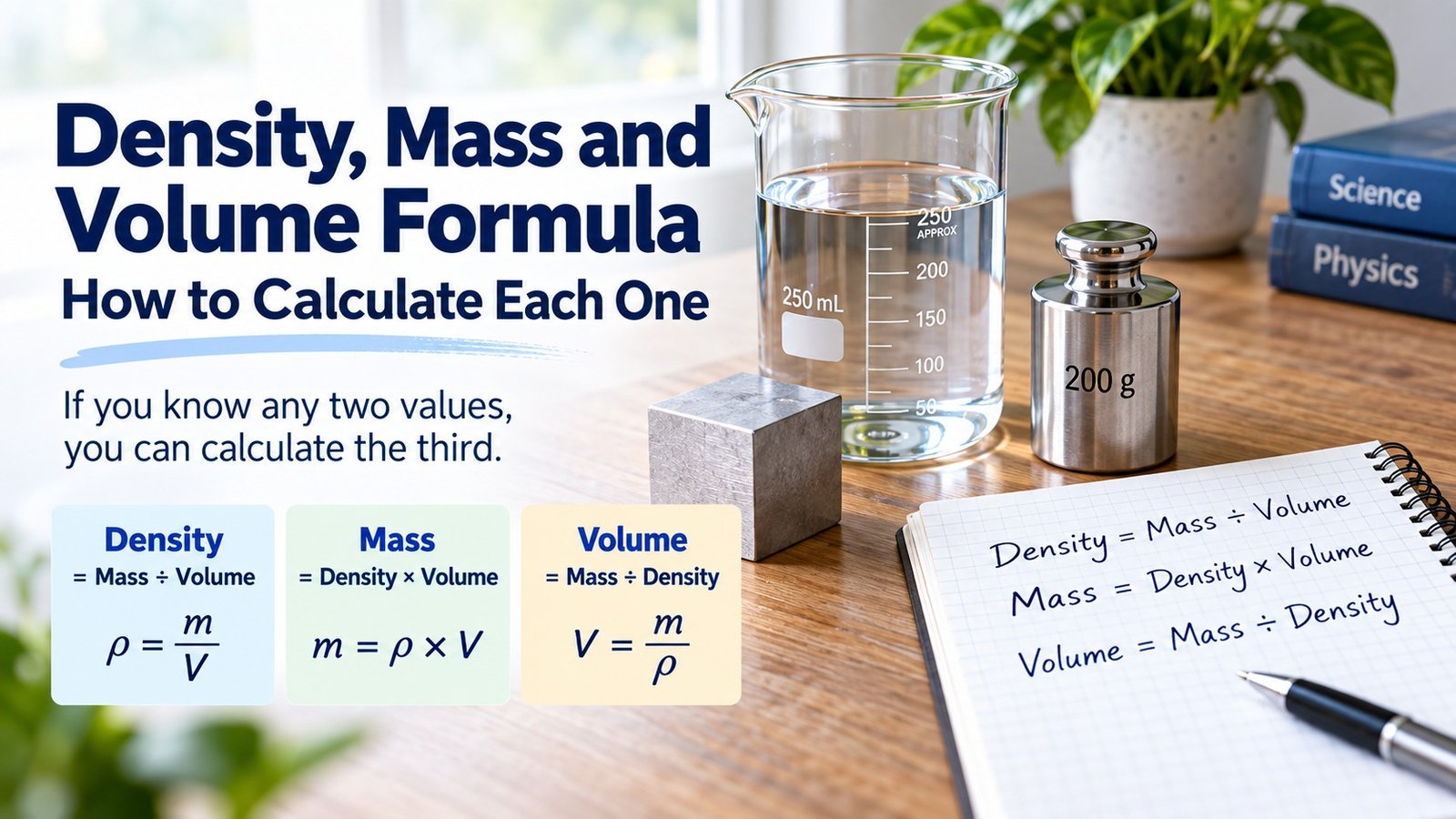
If you know any two of density, mass, and volume, you can calculate the third. The key formulas are simple:
How to Find Volume With Density and Mass
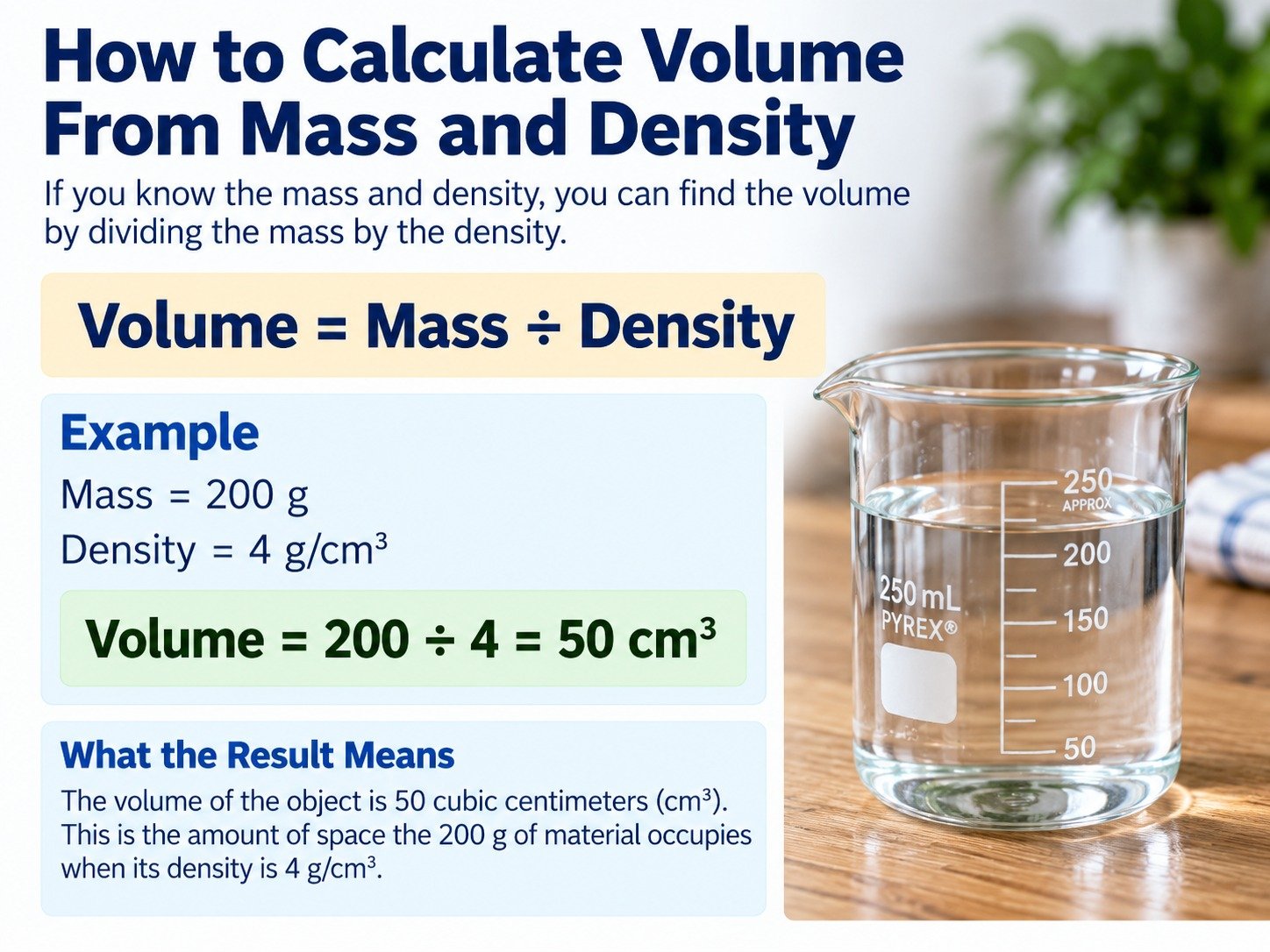
To calculate volume when mass and density are known, divide the mass by the density.
Example: if mass is 200 g and density is 4 g/cm³, then 200 ÷ 4 = 50 cm³.
Density, Mass and Volume Calculator
Choose what you want to calculate, then enter the other two values.
The Density, Mass and Volume Formula Triangle
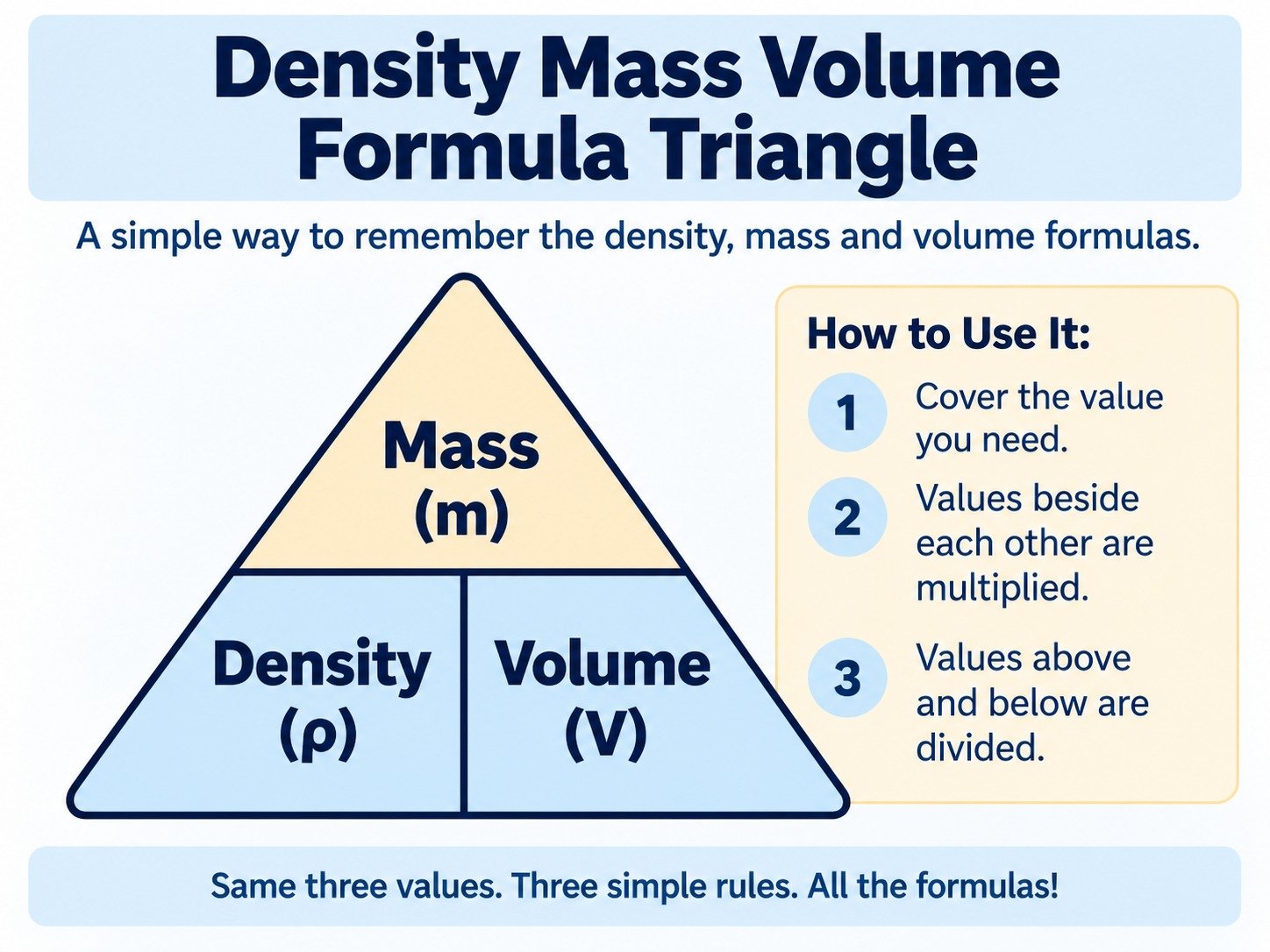
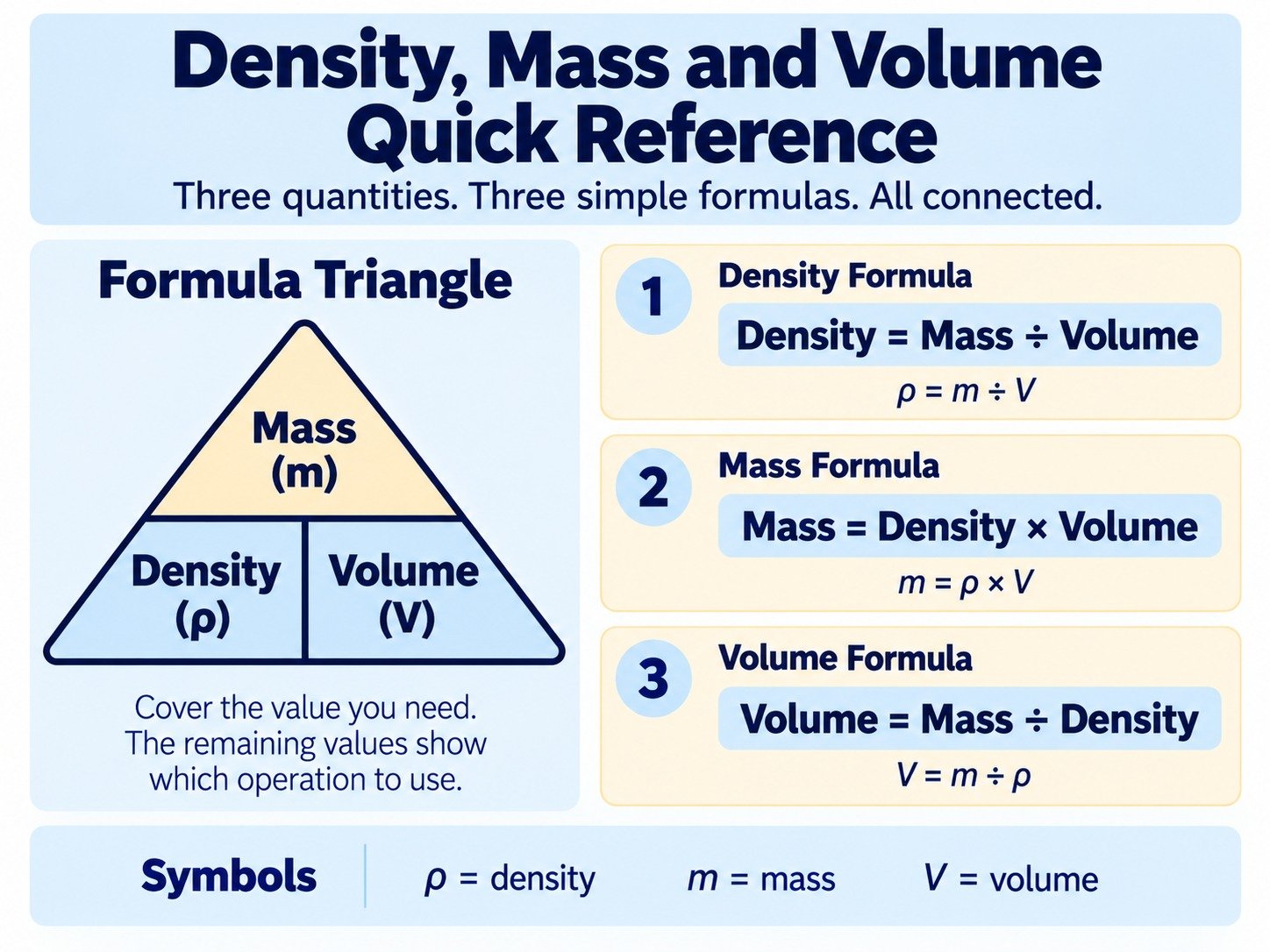
The formula triangle is a memory aid. Put mass (m) at the top and density (ρ) and volume (V) underneath.
Cover the value you need:
- Cover density: mass ÷ volume
- Cover mass: density × volume
- Cover volume: mass ÷ density
What Do Density, Mass and Volume Mean?
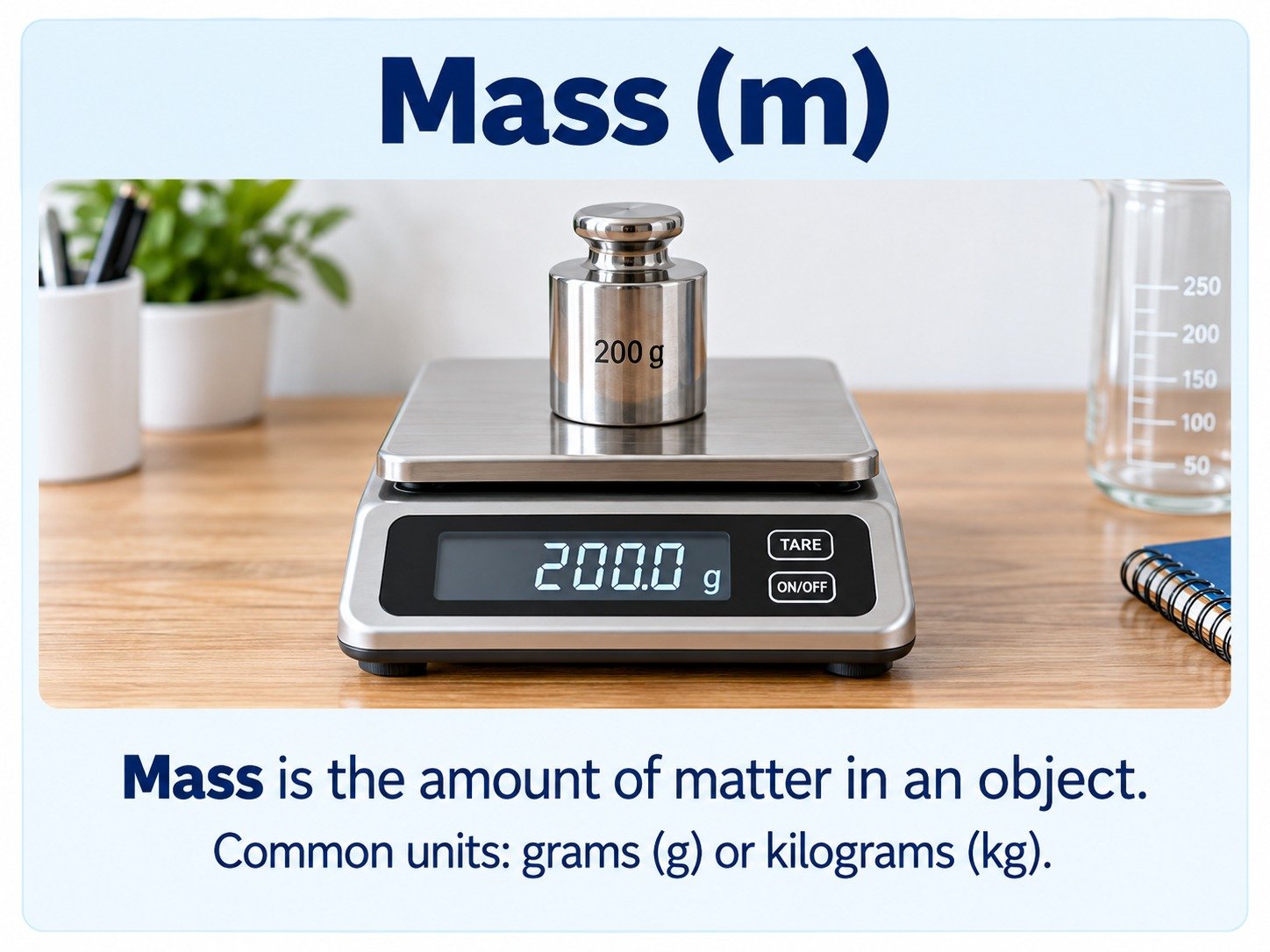
Mass (m)
Mass is the amount of matter in an object. Common units include grams (g) and kilograms (kg).
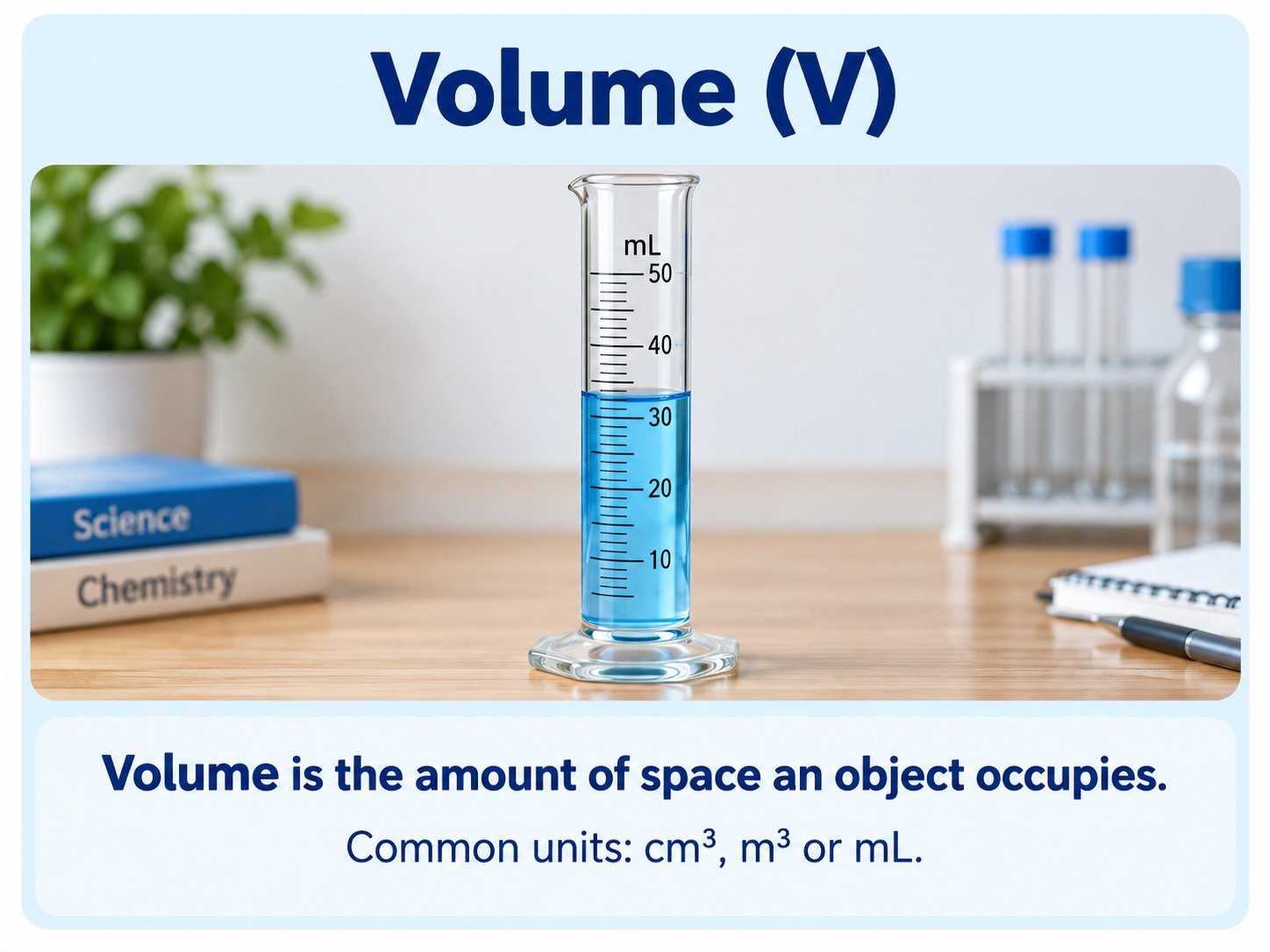
Volume (V)
Volume is the amount of space a substance or object occupies. Common units include cm³, m³, and mL.
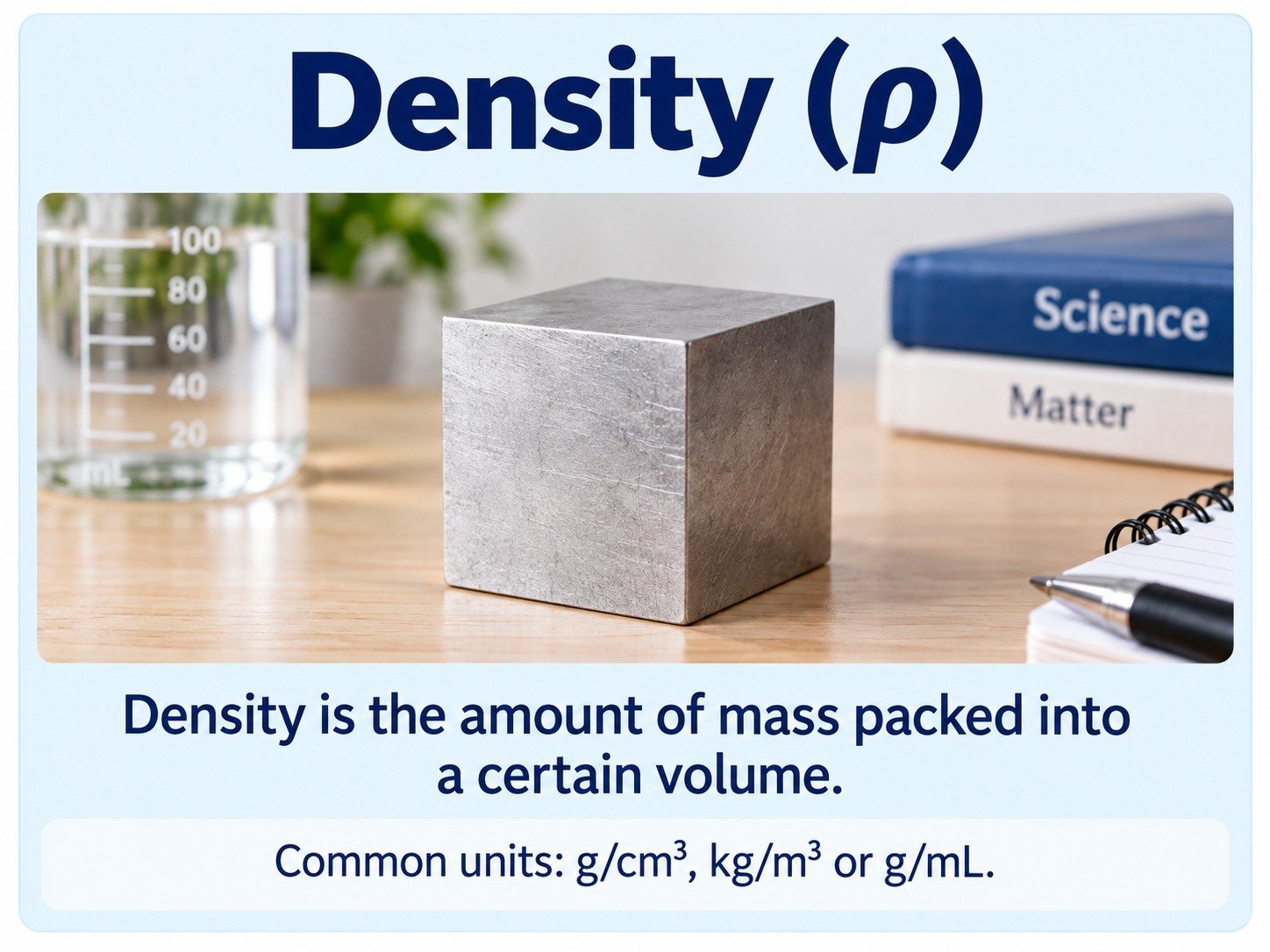
Density (ρ)
Density describes how much mass is packed into a given volume. Common units include g/cm³, g/mL, and kg/m³.
Worked Density, Mass and Volume Examples
1. Calculate Volume From Mass and Density
Formula: Volume = Mass ÷ Density
Mass = 200 g
Density = 4 g/cm³
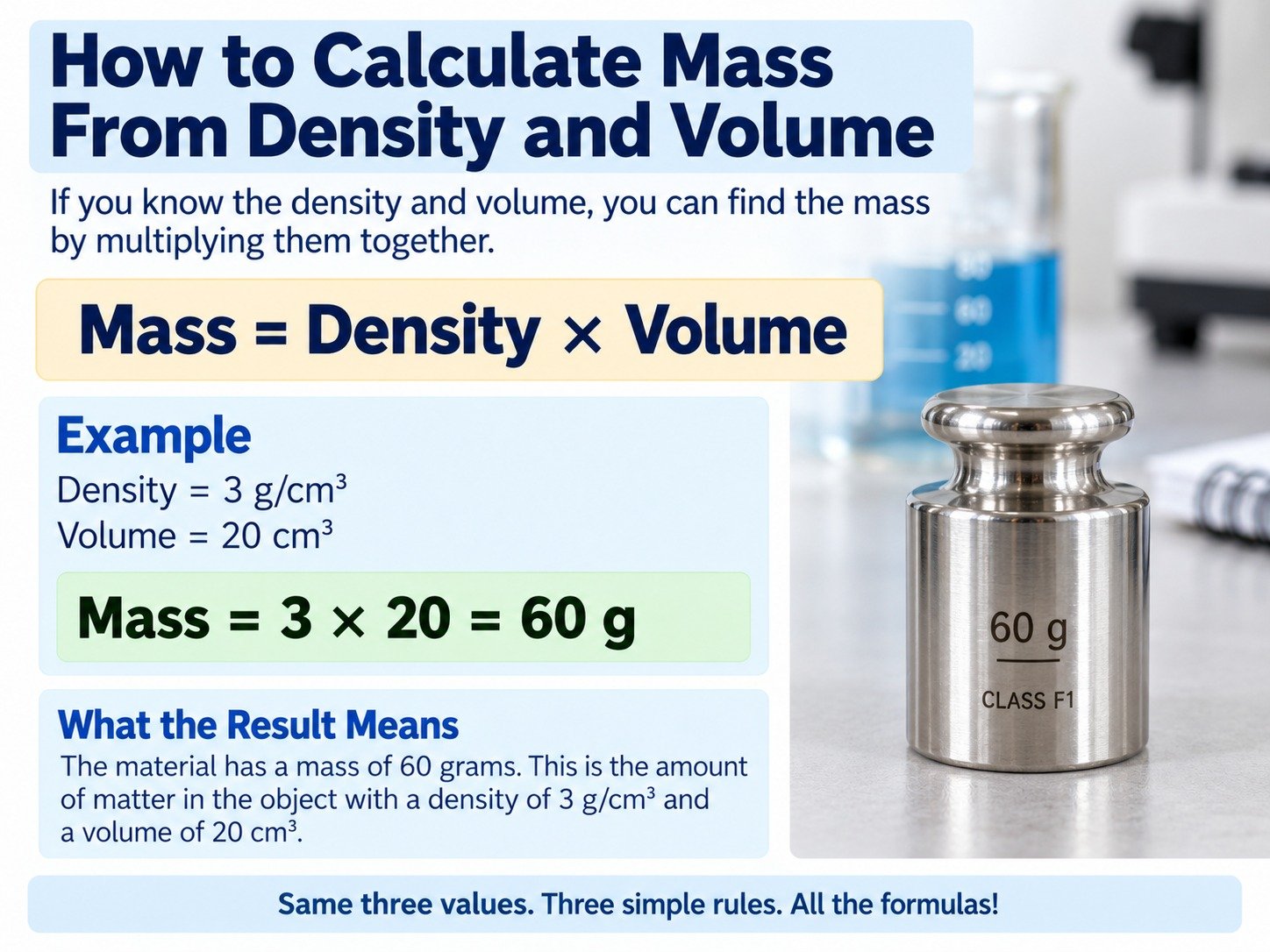
2. Calculate Mass
Mass = Density × Volume
3 g/cm³ × 20 cm³ = 60 g
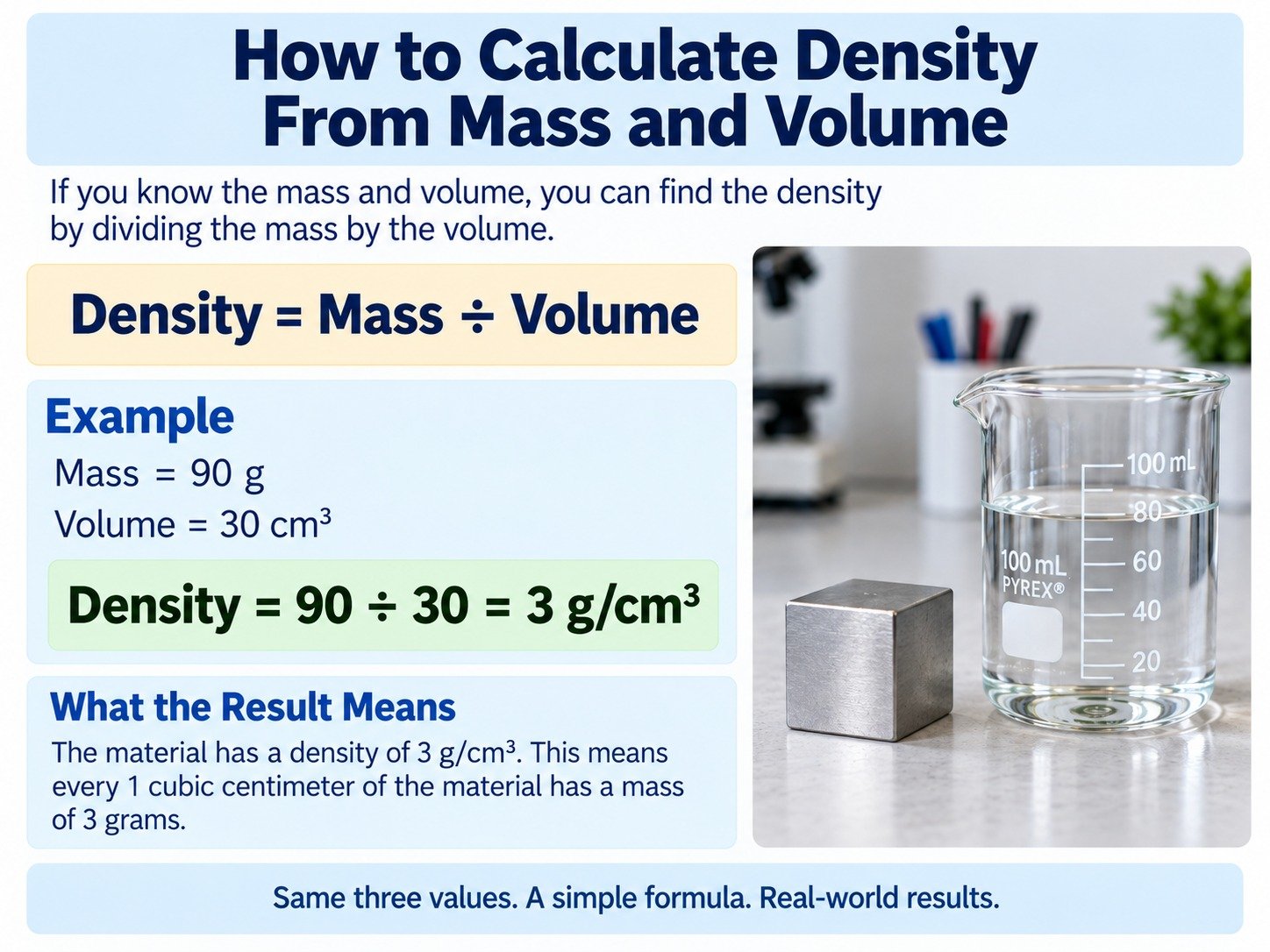
3. Calculate Density
Density = Mass ÷ Volume
90 g ÷ 30 cm³ = 3 g/cm³
Density, Mass and Volume Units
Use compatible units before calculating. This helps the units cancel correctly and gives the right unit for the answer.
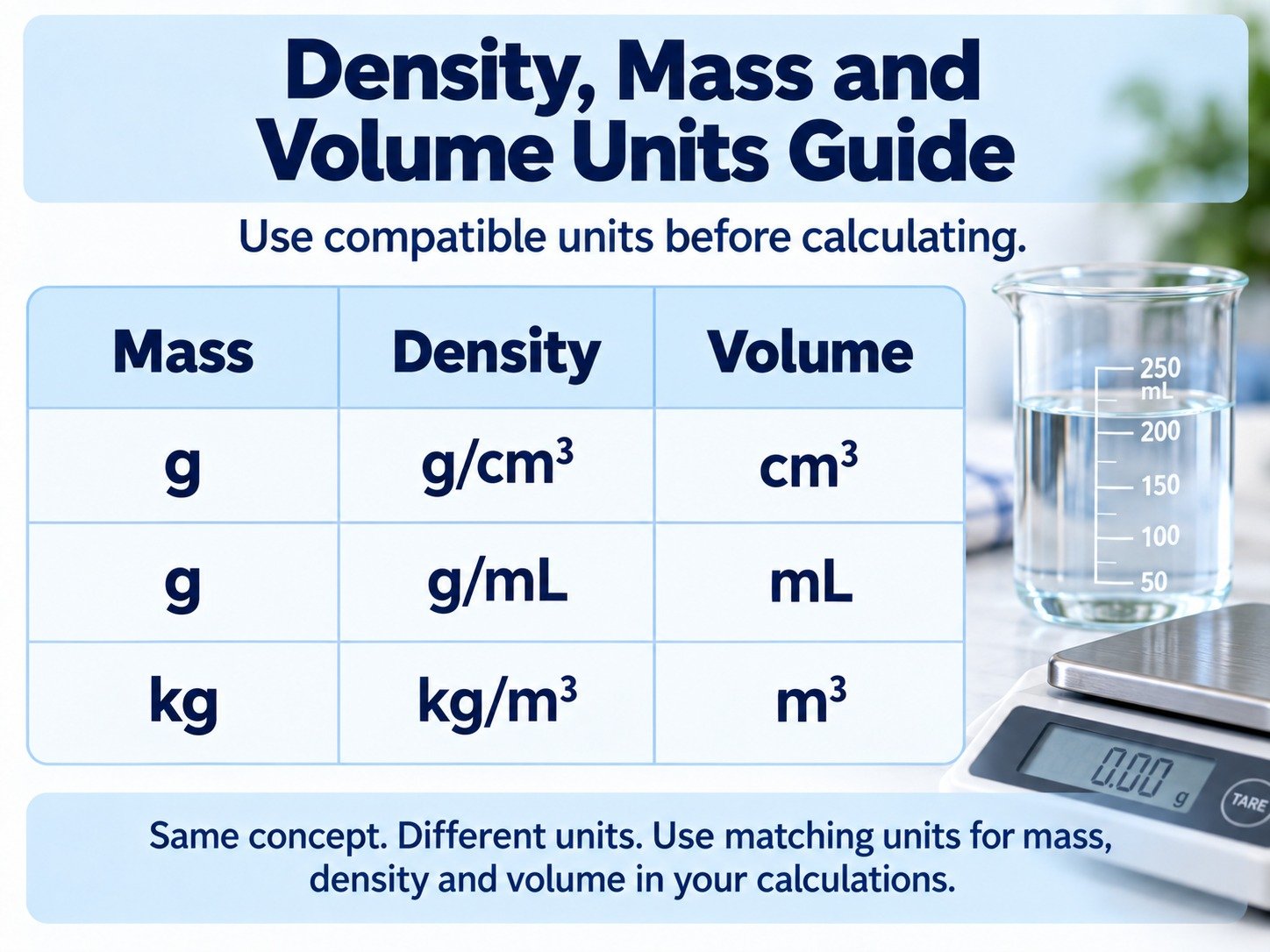
| Mass | Density | Volume |
|---|---|---|
| g | g/cm³ | cm³ |
| g | g/mL | mL |
| kg | kg/m³ | m³ |
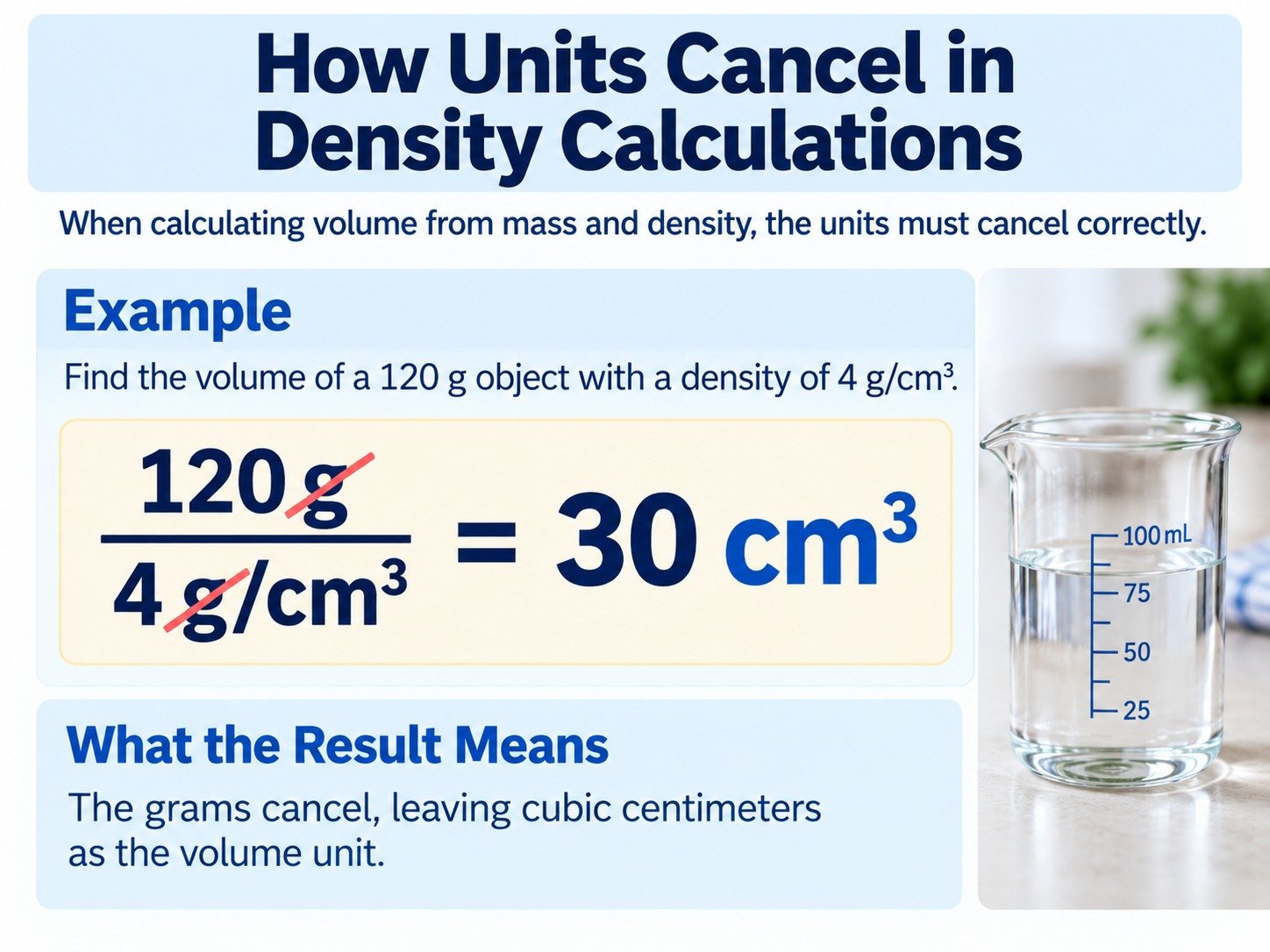
How Units Cancel
Example: 120 g ÷ 4 g/cm³ = 30 cm³. The grams cancel, leaving cubic centimeters.
Real-World Density Examples
These approximate values help show how different materials can have very different densities.
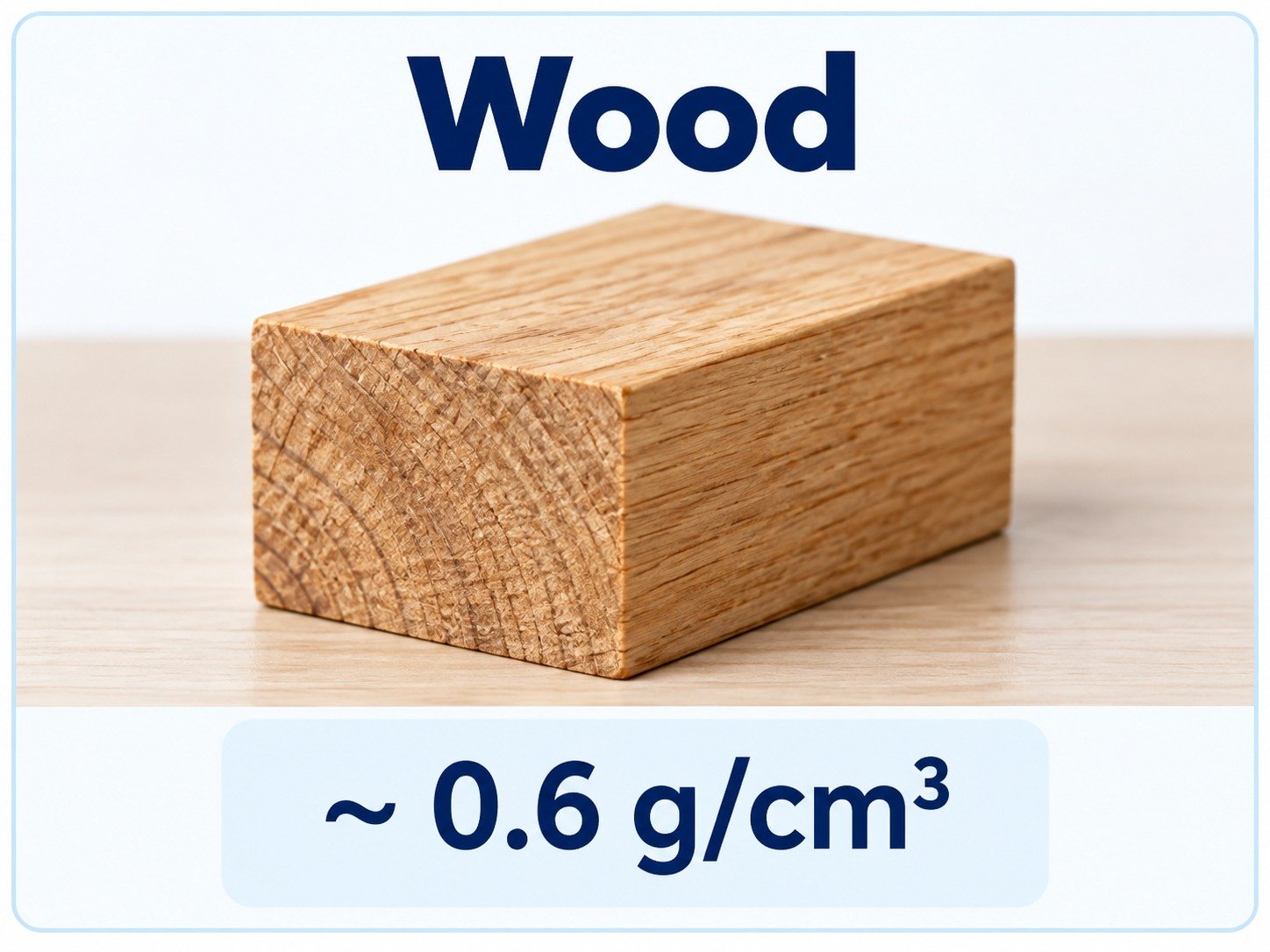 Wood
Wood
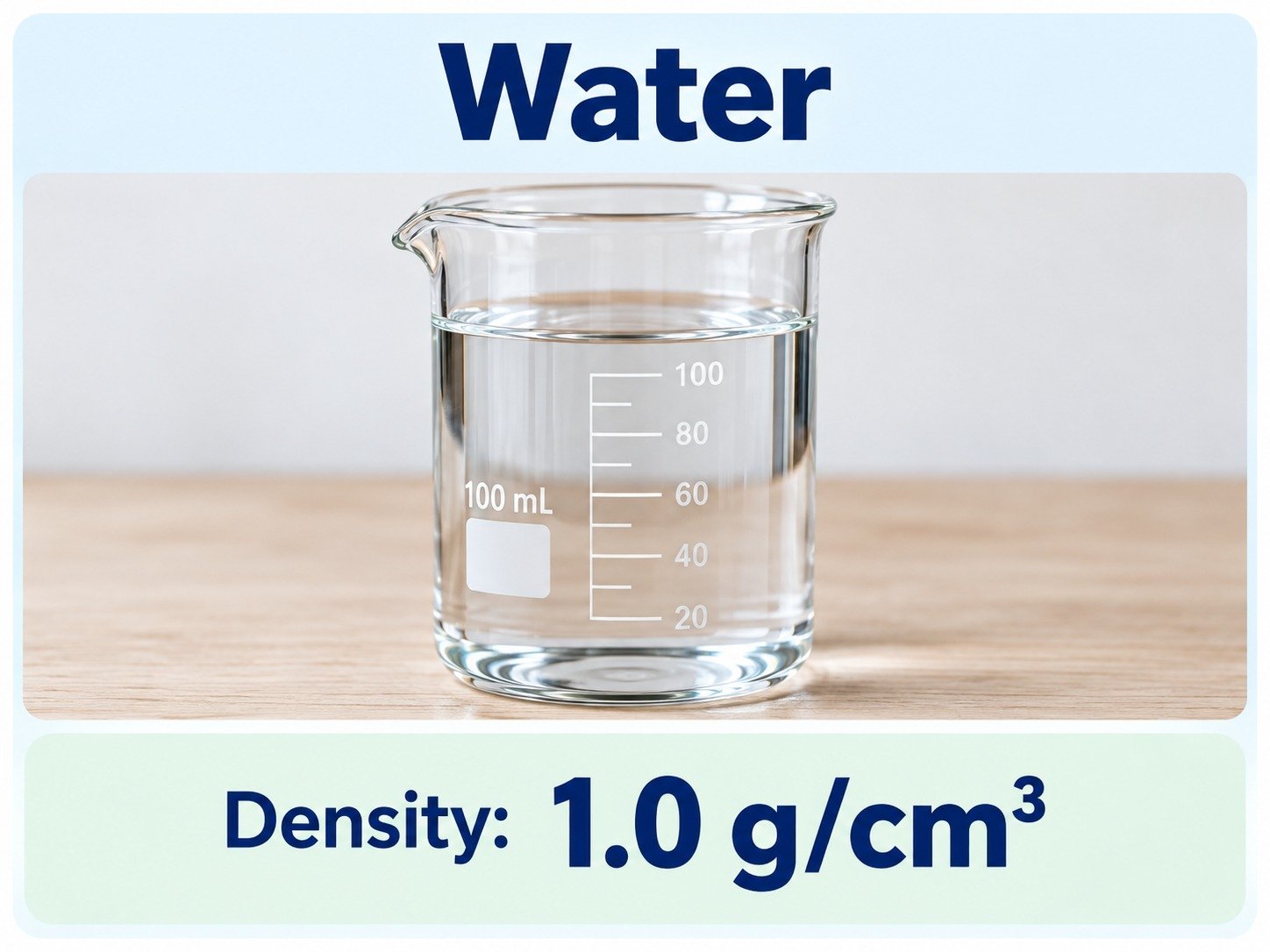 Water
Water
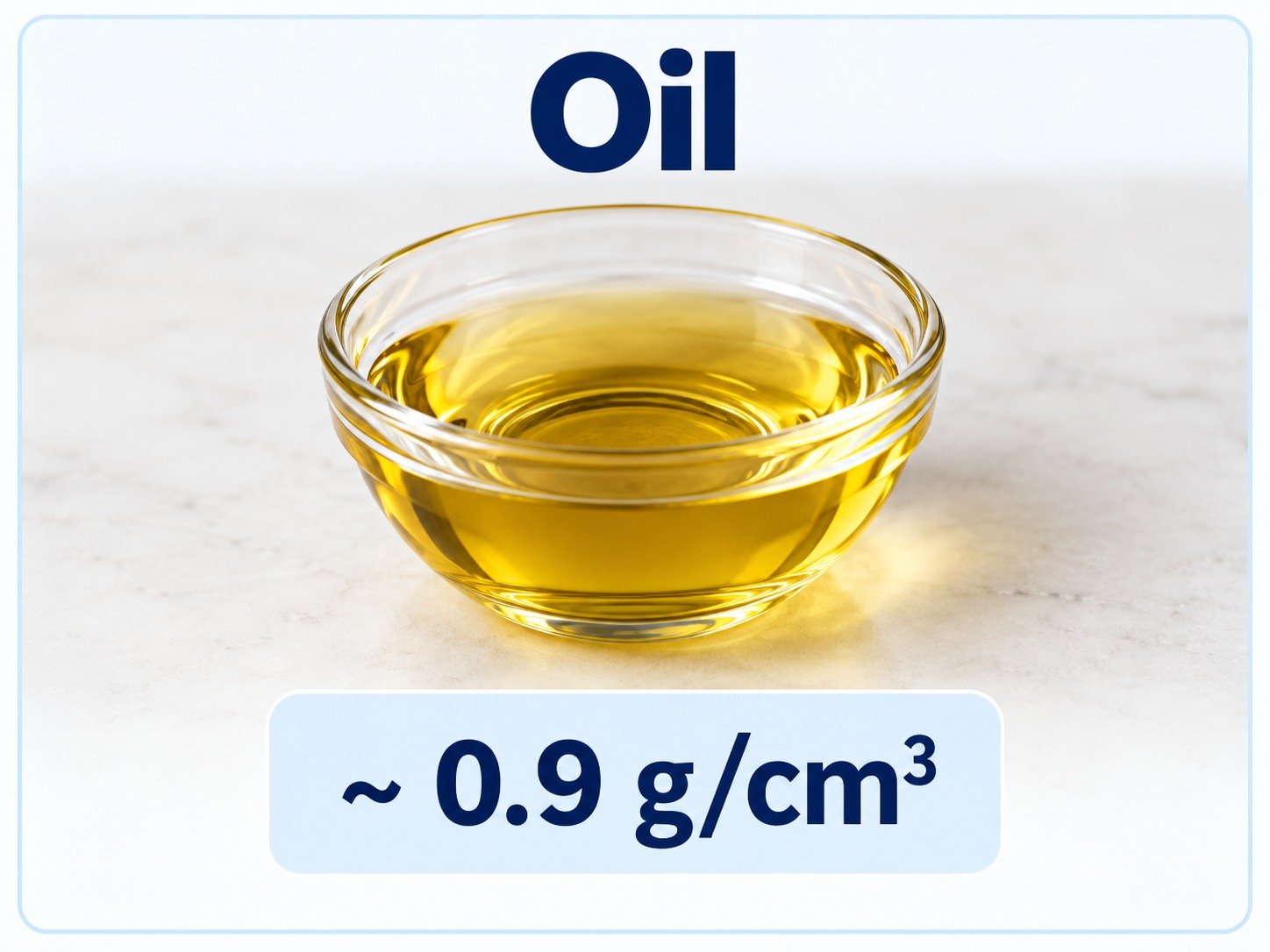 Oil
Oil
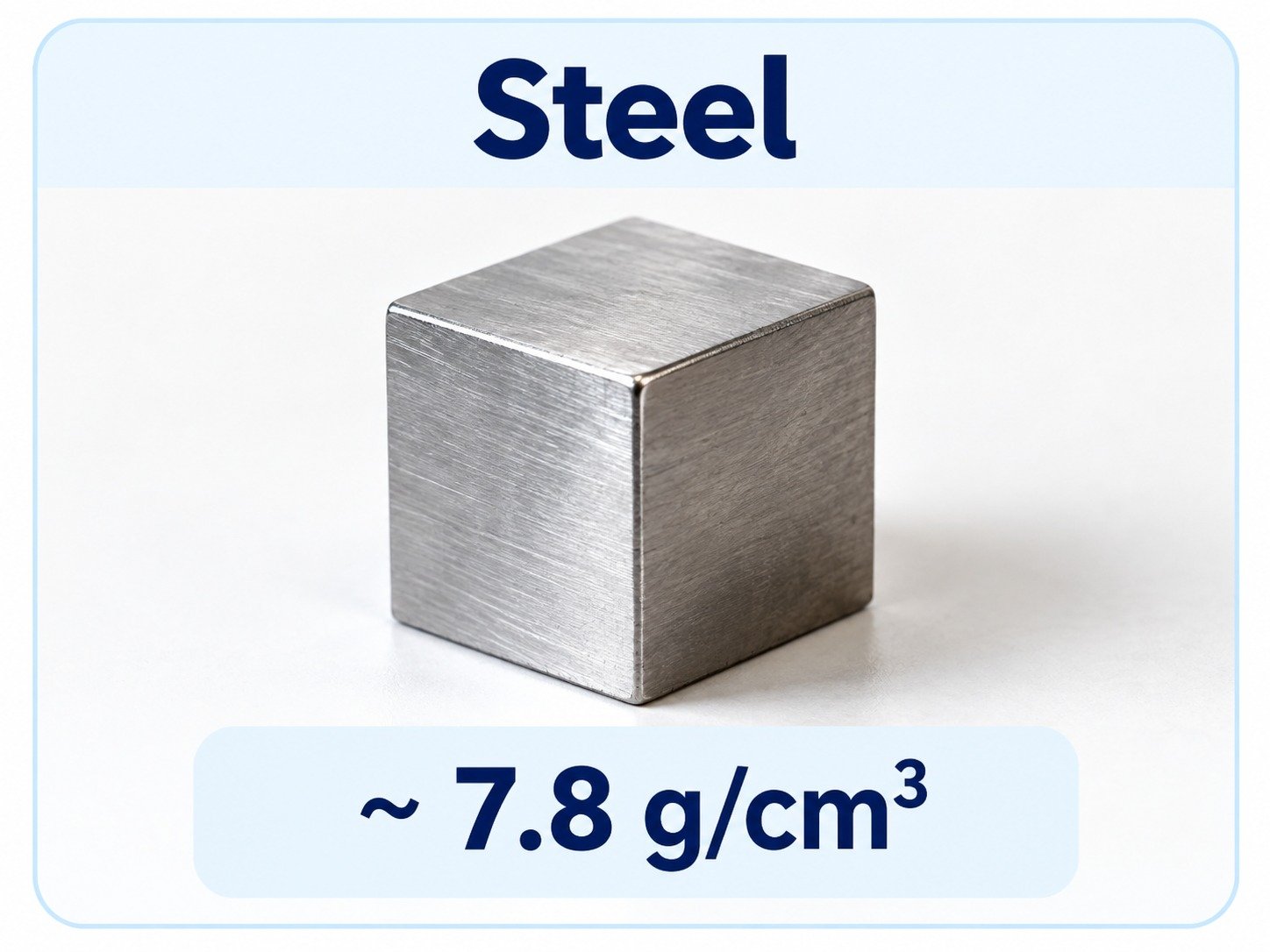 Steel
Steel
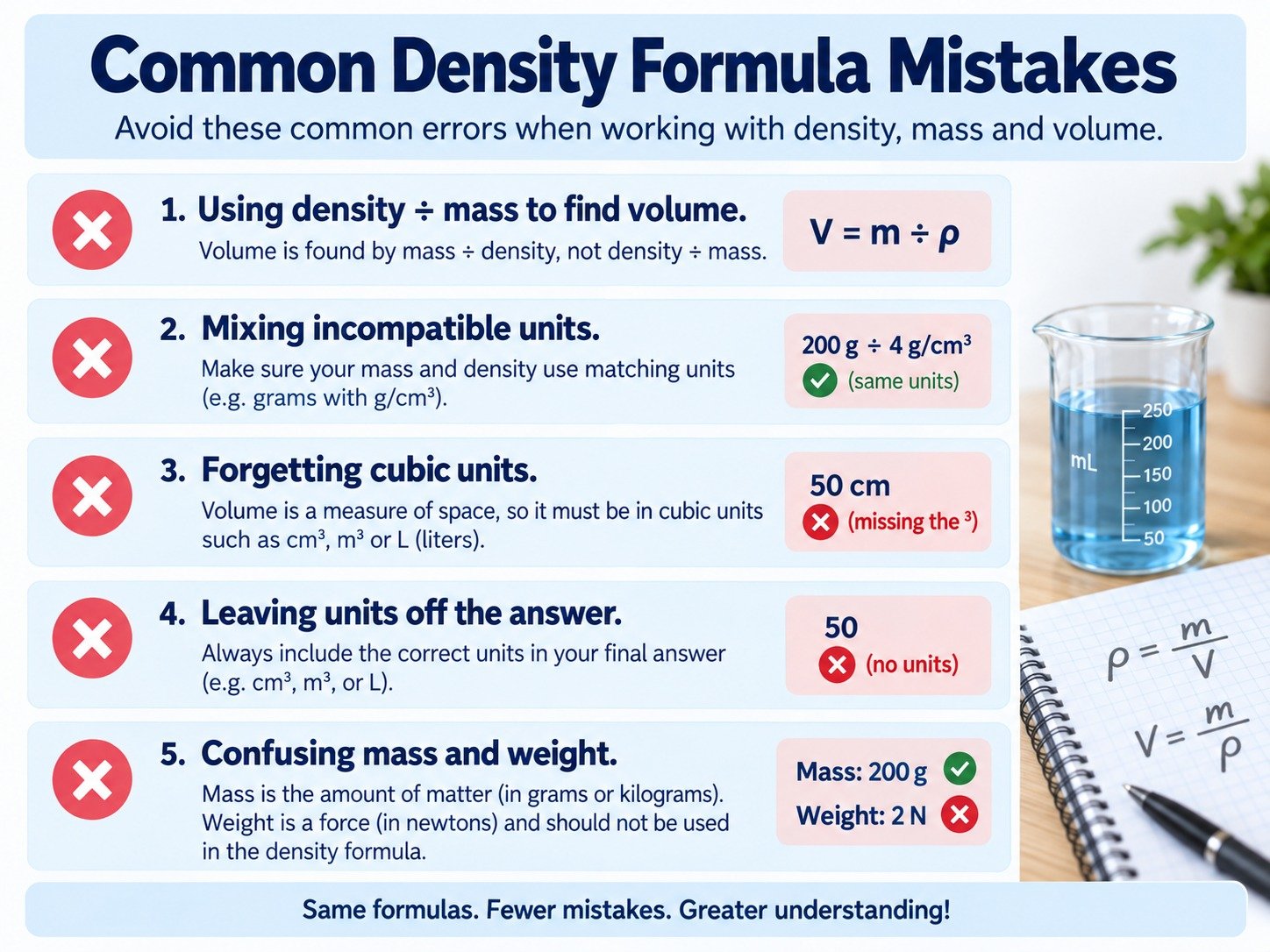
Common Density Formula Mistakes
- Using density ÷ mass when finding volume.
- Mixing incompatible units.
- Forgetting cubic units such as cm³ or m³.
- Leaving the unit off the final answer.
- Confusing mass with weight.
Practice Problems
Try each problem before opening the answer.
Mass = 150 g, Density = 5 g/cm³
Volume = 150 ÷ 5 = 30 cm³
Density = 8 g/cm³, Volume = 10 cm³
Mass = 8 × 10 = 80 g
Mass = 240 g, Volume = 80 cm³
Density = 240 ÷ 80 = 3 g/cm³
Density, Mass and Volume Quick Reference
Density = Mass ÷ Volume
Mass = Density × Volume
Volume = Mass ÷ Density
ρ = density | m = mass | V = volume
Frequently Asked Questions
What is the volume formula with density and mass?
Volume equals mass divided by density: V = m ÷ ρ.
How do you calculate density?
Divide mass by volume: Density = Mass ÷ Volume.
How do you calculate mass?
Multiply density by volume: Mass = Density × Volume.
What units should I use?
Use compatible sets such as g, g/cm³ and cm³; g, g/mL and mL; or kg, kg/m³ and m³.
Can density be measured in kg/m³?
Yes. Kilograms per cubic meter (kg/m³) is a standard density unit.