
How Many Grams of Sugar Are in a Teaspoon? Conversion Guide
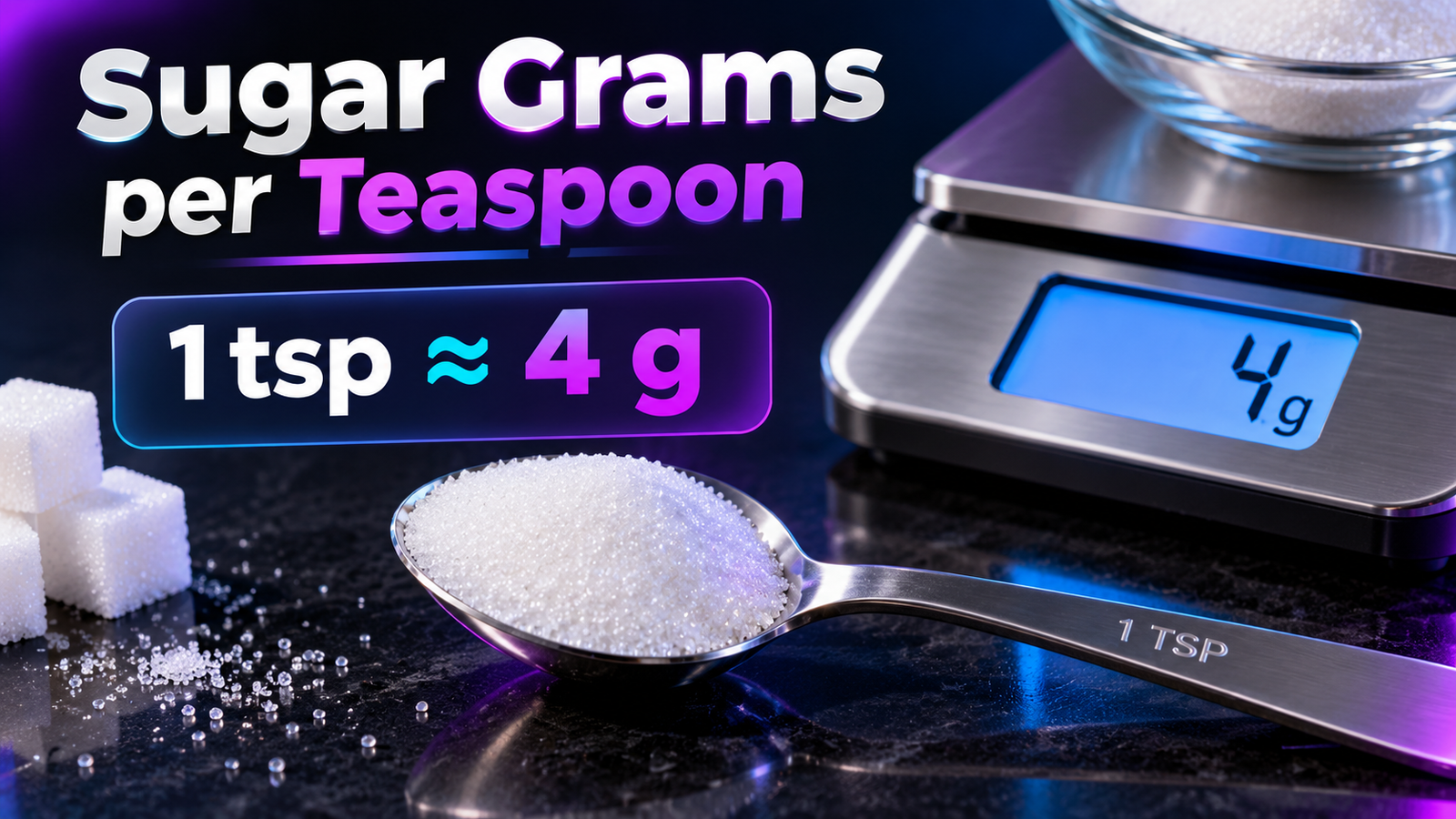
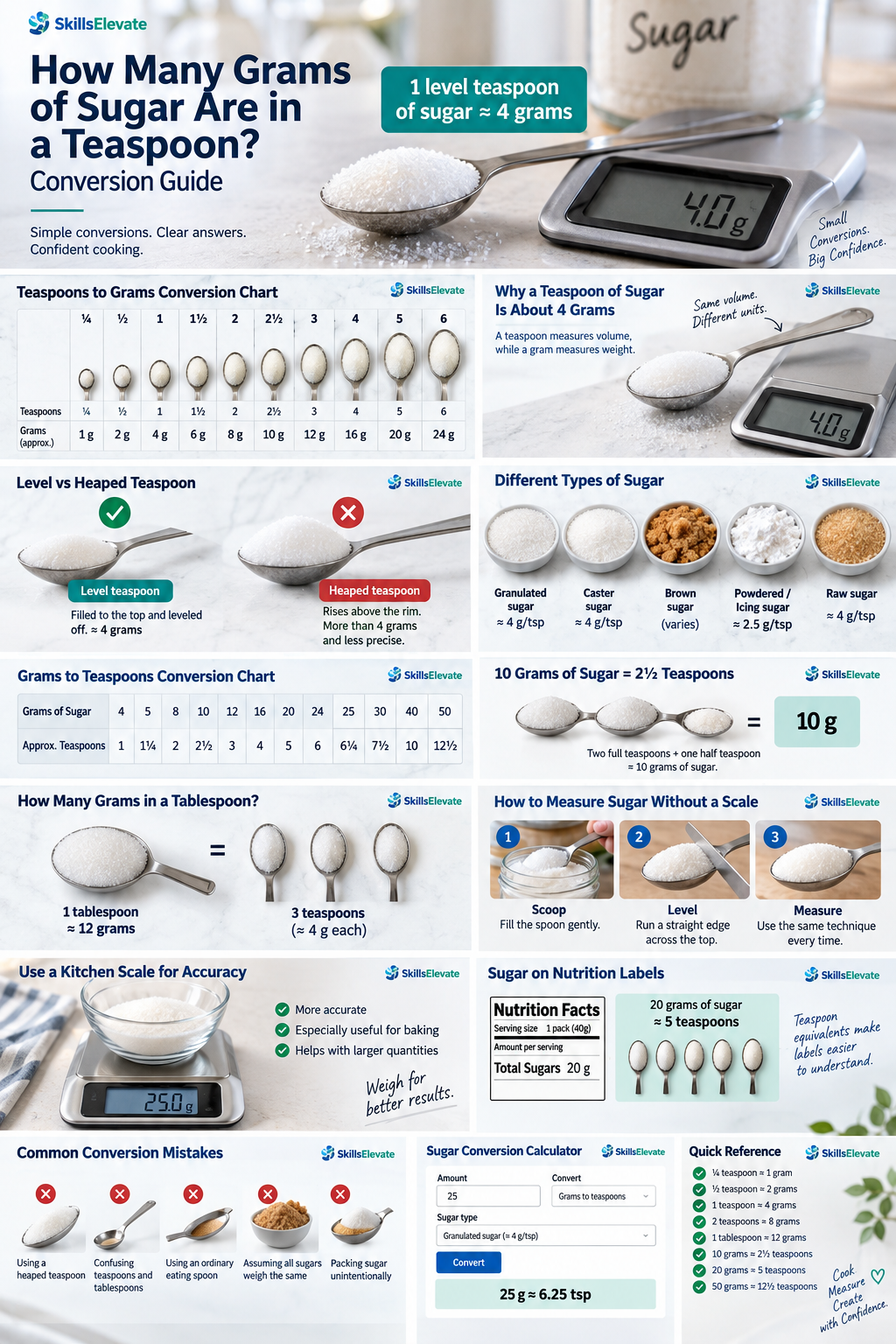
If a recipe lists sugar in grams but you only have measuring spoons, the conversion is simple. A level teaspoon of ordinary granulated sugar weighs approximately 4 grams.
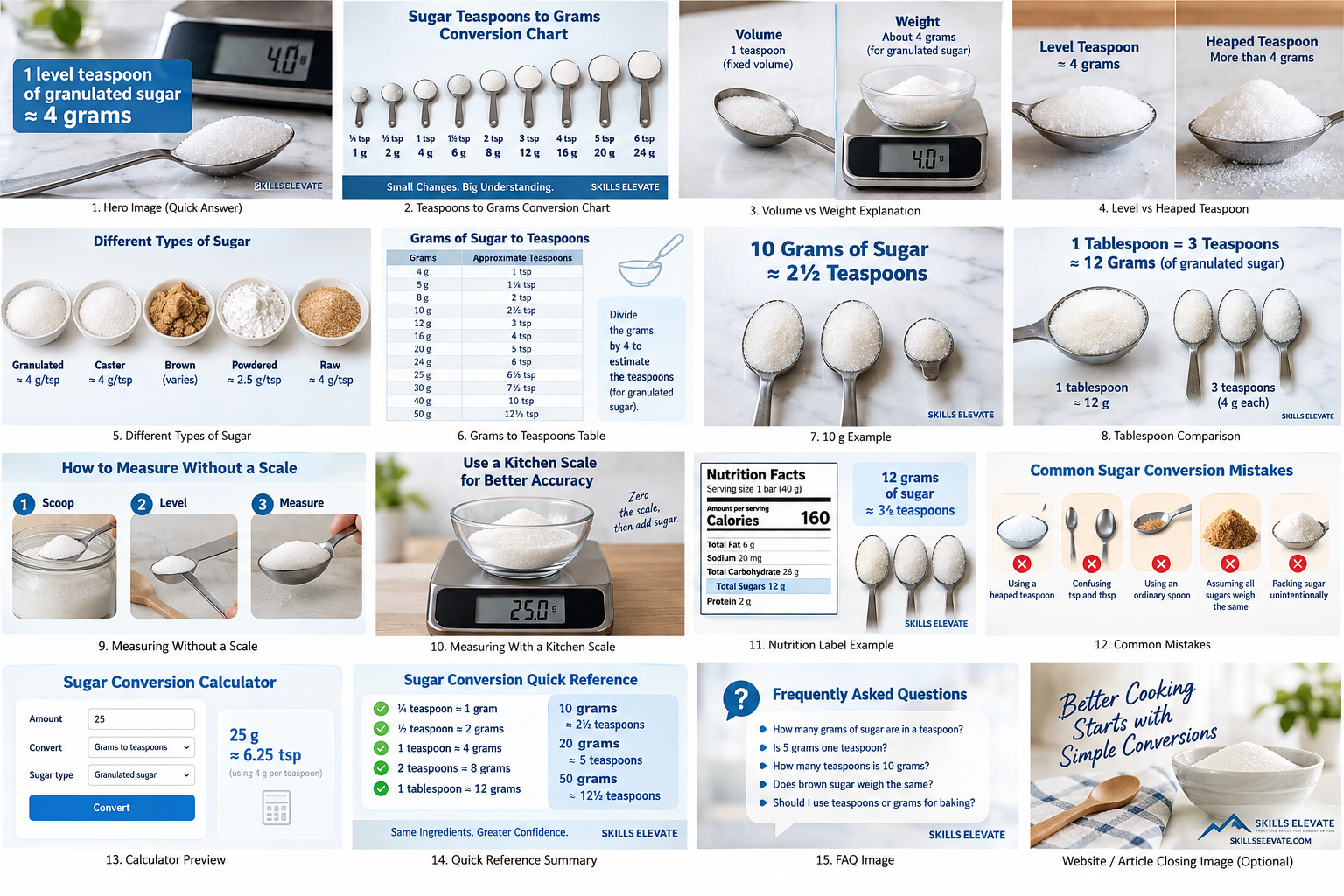
Sugar Teaspoons to Grams Conversion Chart
For everyday cooking and quick conversions, you can use approximately 4 grams for each level teaspoon of granulated sugar.
| Teaspoons of Sugar | Approximate Grams |
|---|---|
| ¼ teaspoon | 1 g |
| ½ teaspoon | 2 g |
| 1 teaspoon | 4 g |
| 1½ teaspoons | 6 g |
| 2 teaspoons | 8 g |
| 2½ teaspoons | 10 g |
| 3 teaspoons | 12 g |
| 4 teaspoons | 16 g |
| 5 teaspoons | 20 g |
| 6 teaspoons | 24 g |
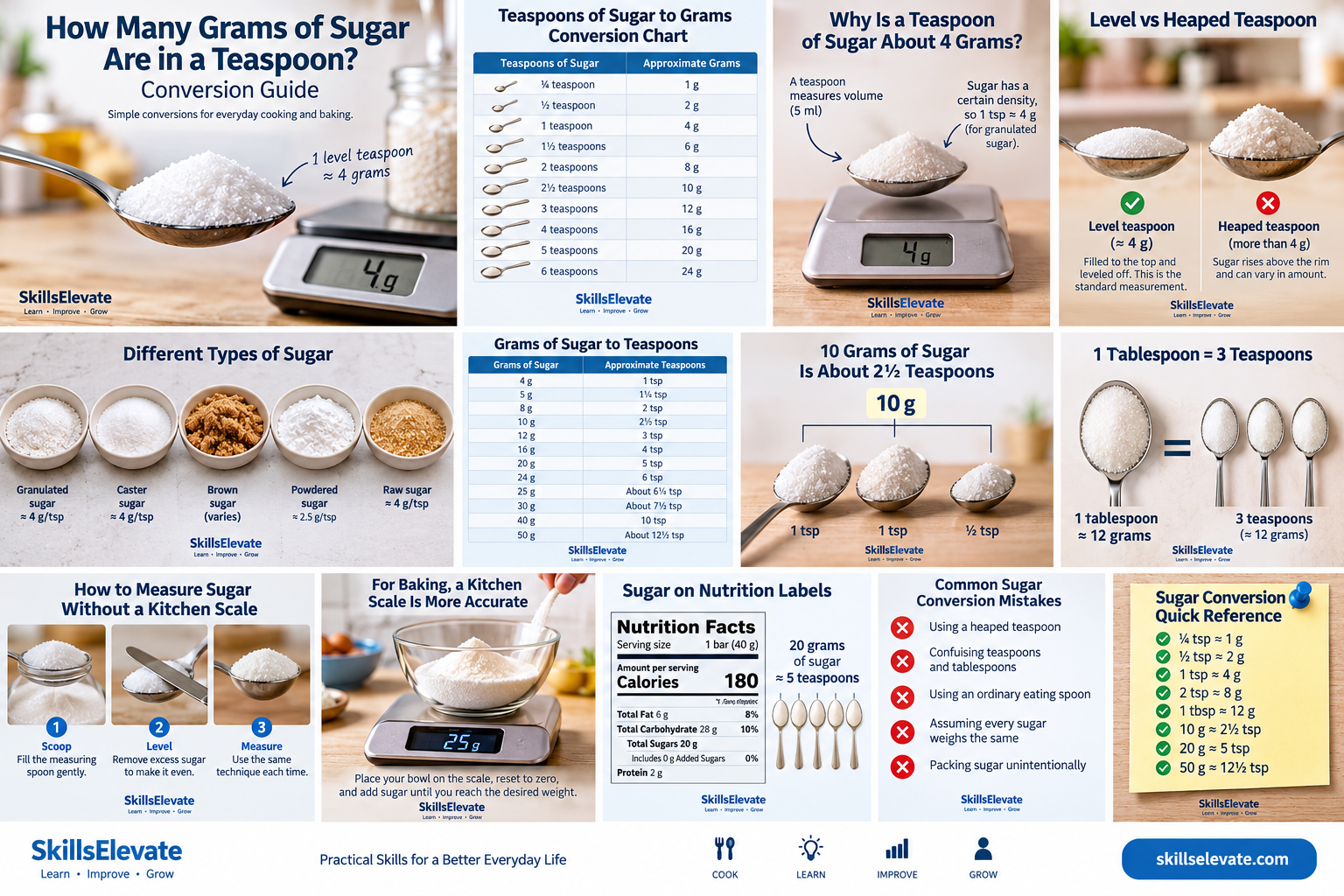
Sugar Grams to Teaspoons Calculator
Enter the amount you have and choose whether you want to convert grams to teaspoons or teaspoons to grams.
The calculator provides practical kitchen estimates. Because sugar density and measuring technique vary, use a kitchen scale when exact baking measurements are important.
Why Is a Teaspoon of Sugar About 4 Grams?
A teaspoon measures volume, while a gram measures weight. To convert between them, you need to know approximately how much the ingredient weighs when it fills that volume.
For ordinary granulated sugar, a level teaspoon is commonly estimated at around 4 grams. This makes 4 grams a convenient number for everyday recipe conversions.
However, it should not be treated as an exact value for every type of sugar. Fine, coarse, powdered, loose, and packed sugars can have different weights even when they occupy the same teaspoon.
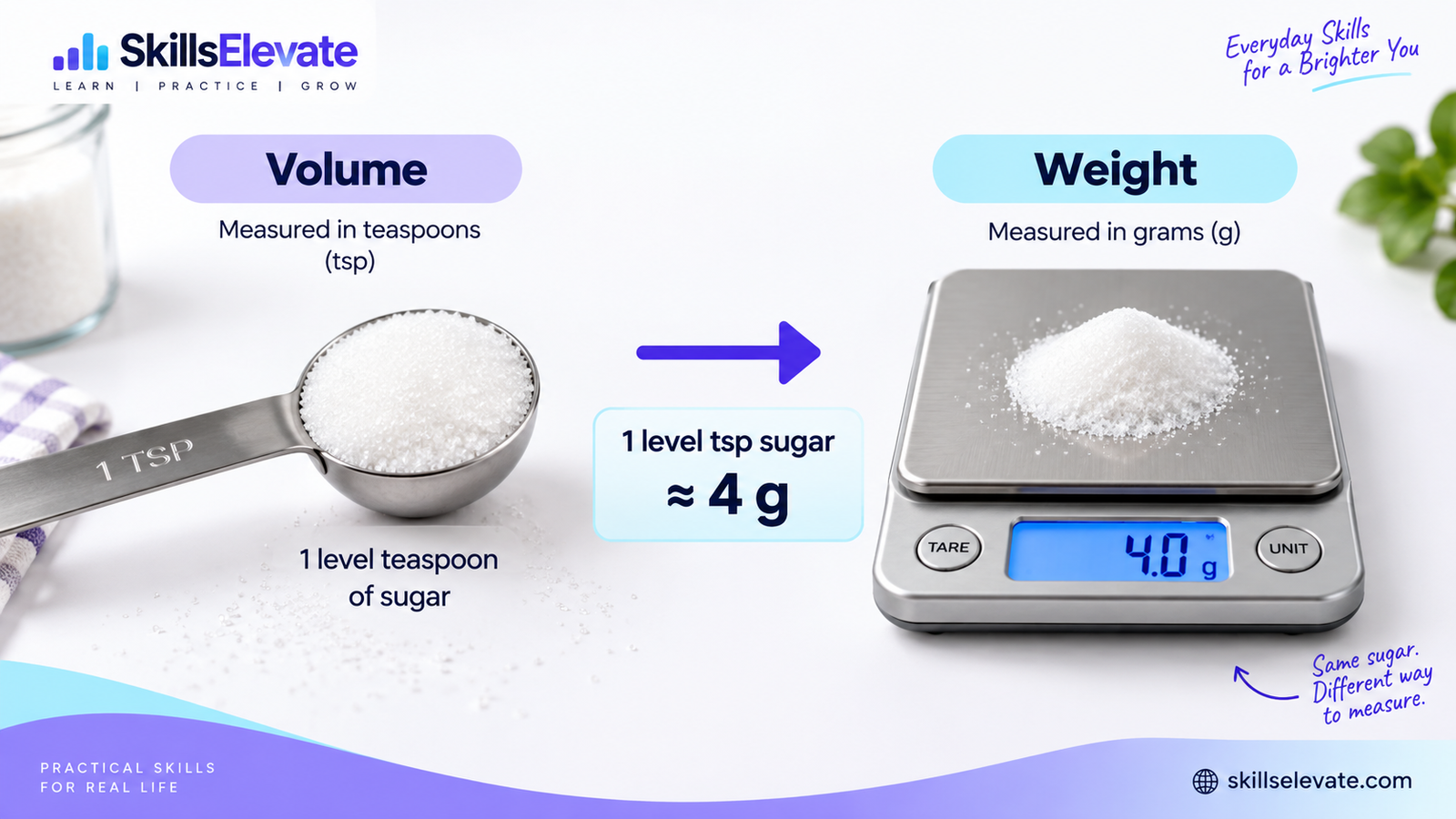
Level Teaspoon vs Heaped Teaspoon
When a conversion says that a teaspoon of sugar is about 4 grams, it normally means a level measuring teaspoon.
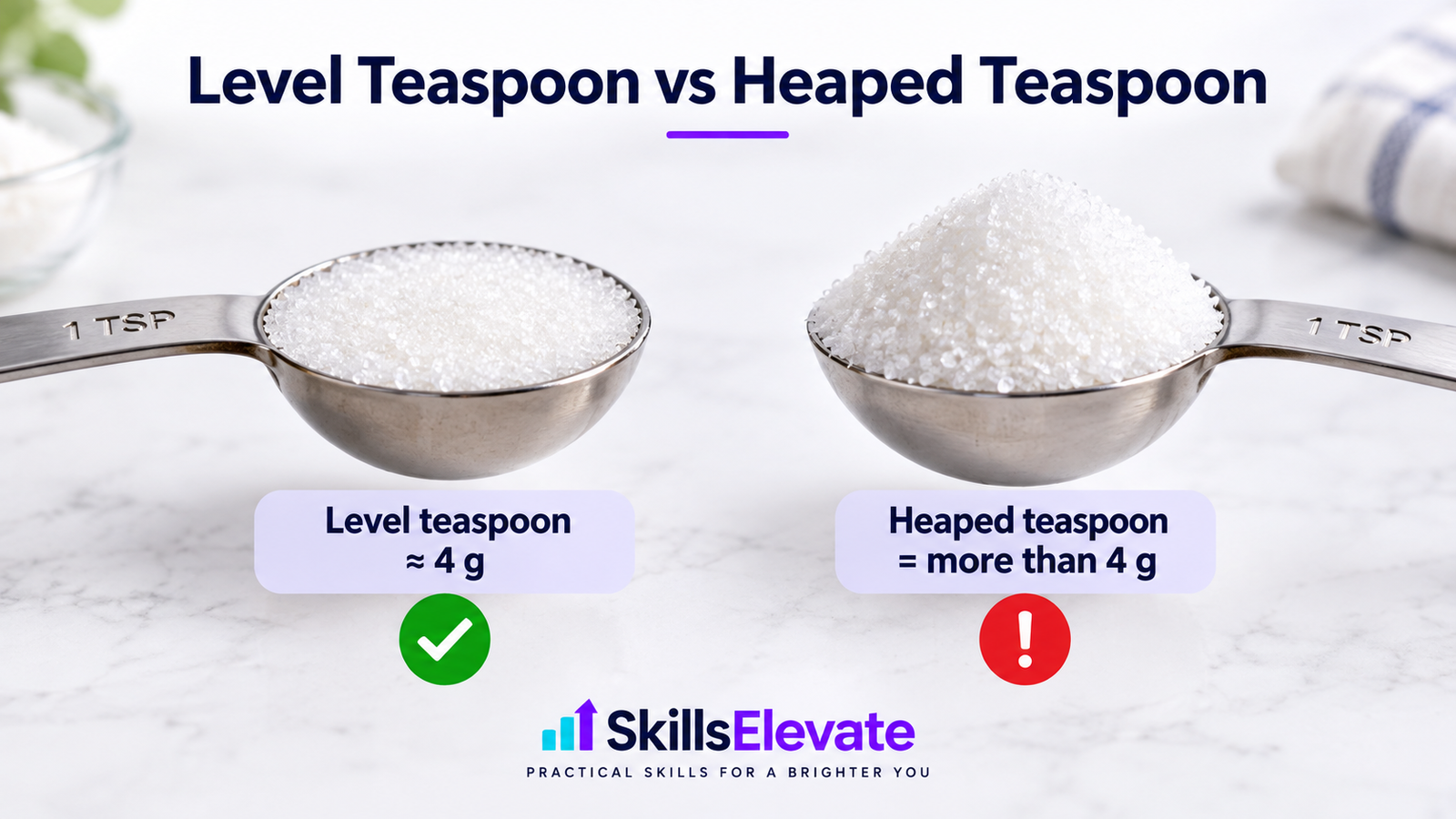
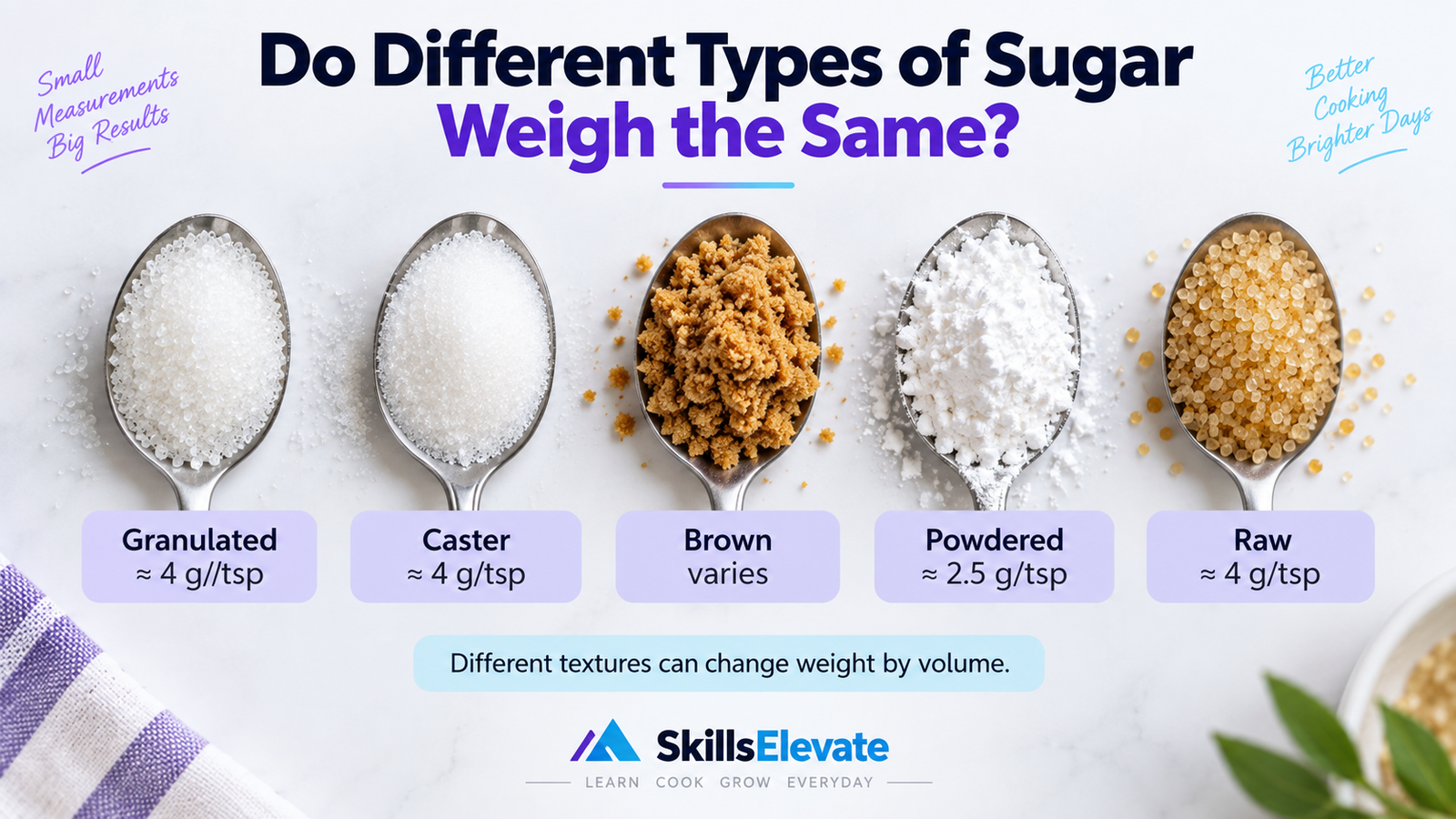
Do Different Types of Sugar Weigh the Same?
Not necessarily. Different sugars have different crystal sizes, moisture levels, and densities. That means one teaspoon of each type may not weigh exactly the same amount.
| Sugar Type | What to Know |
|---|---|
| Granulated white sugar | About 4 g per level teaspoon is a useful rounded conversion. |
| Caster sugar | Fine crystals may pack slightly differently, but the weight is often close to granulated sugar. |
| Brown sugar | Weight can change depending on whether it is loose or packed. |
| Powdered / icing sugar | Much lighter by volume, so one teaspoon can weigh less than granulated sugar. |
| Raw sugar | Larger crystals can create small differences in teaspoon weight. |
Grams of Sugar to Teaspoons
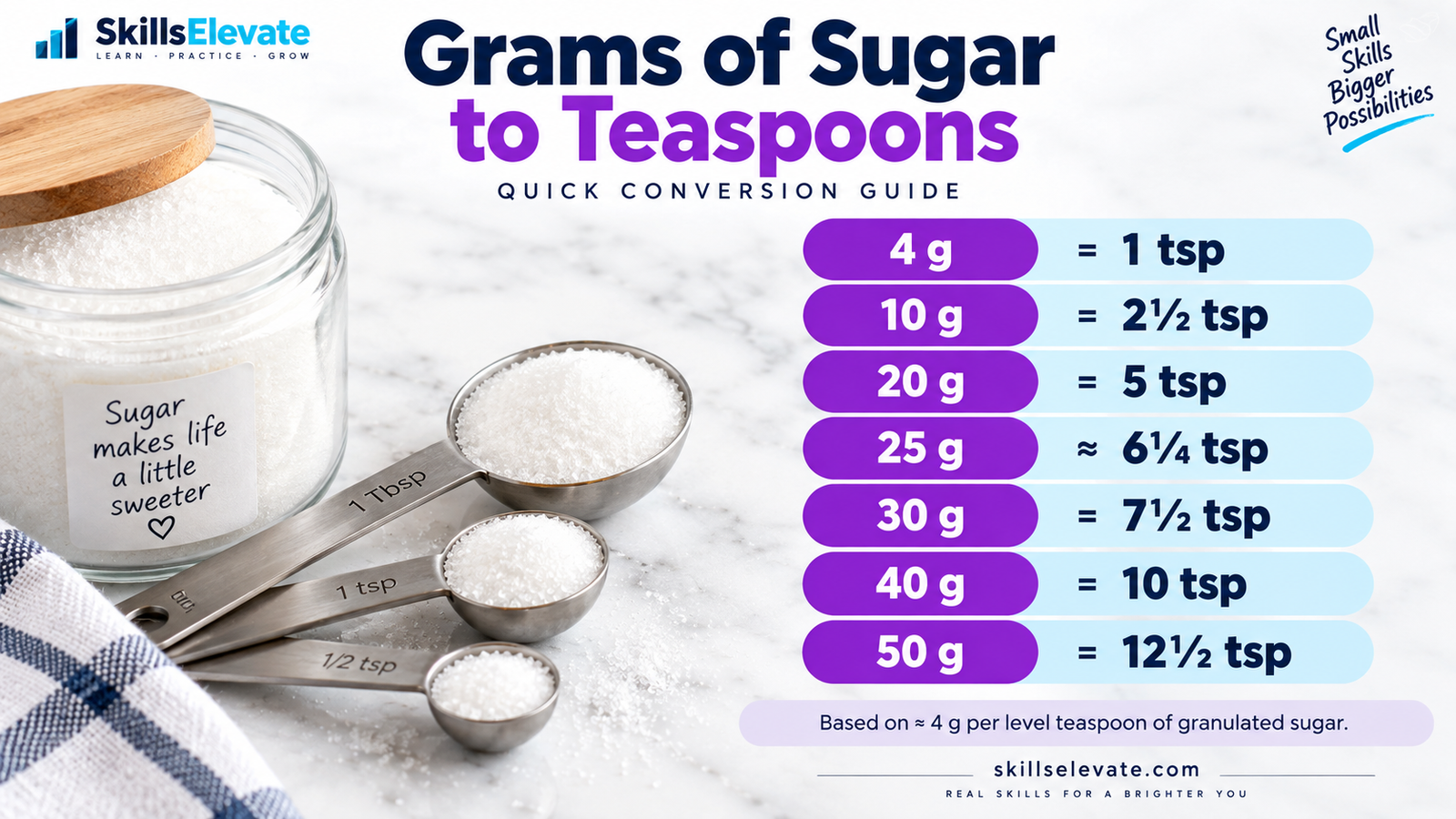
If your recipe gives the amount in grams, divide the number of grams by approximately 4 to estimate the number of teaspoons of granulated sugar.
| Grams of Sugar | Approximate Teaspoons |
|---|---|
| 4 g | 1 tsp |
| 5 g | 1¼ tsp |
| 8 g | 2 tsp |
| 10 g | 2½ tsp |
| 12 g | 3 tsp |
| 16 g | 4 tsp |
| 20 g | 5 tsp |
| 24 g | 6 tsp |
| 25 g | About 6¼ tsp |
| 30 g | About 7½ tsp |
| 40 g | 10 tsp |
| 50 g | About 12½ tsp |
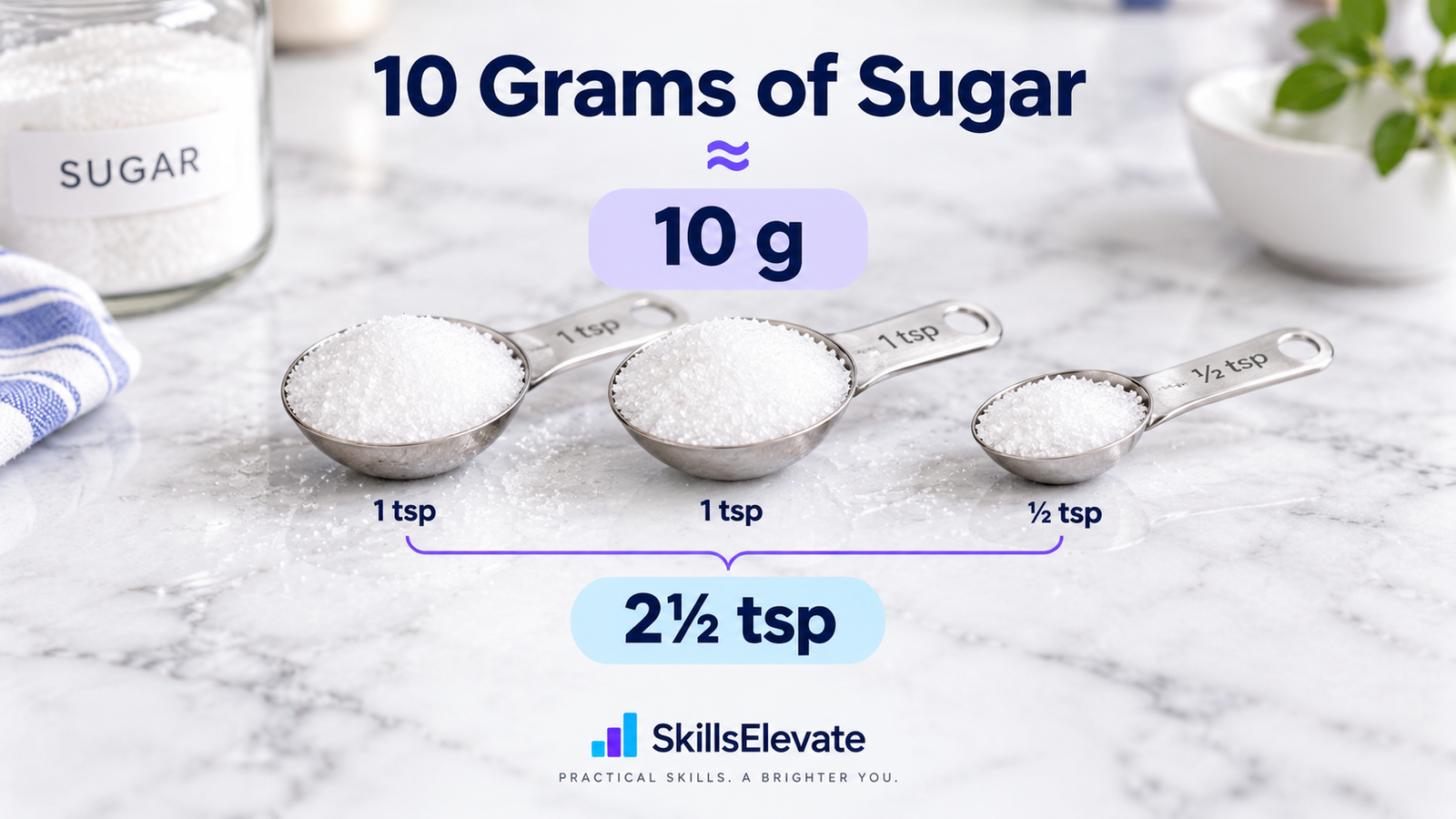
How Many Teaspoons Is 10 Grams of Sugar?
This is a useful example because many recipes and nutrition labels use amounts that do not convert into a whole number of teaspoons.
How Many Grams of Sugar Are in a Tablespoon?
One standard tablespoon equals 3 teaspoons. Using the rounded conversion of 4 grams per teaspoon:
More precise ingredient databases and product measurements may give slightly different values, so this should be treated as a practical kitchen estimate.
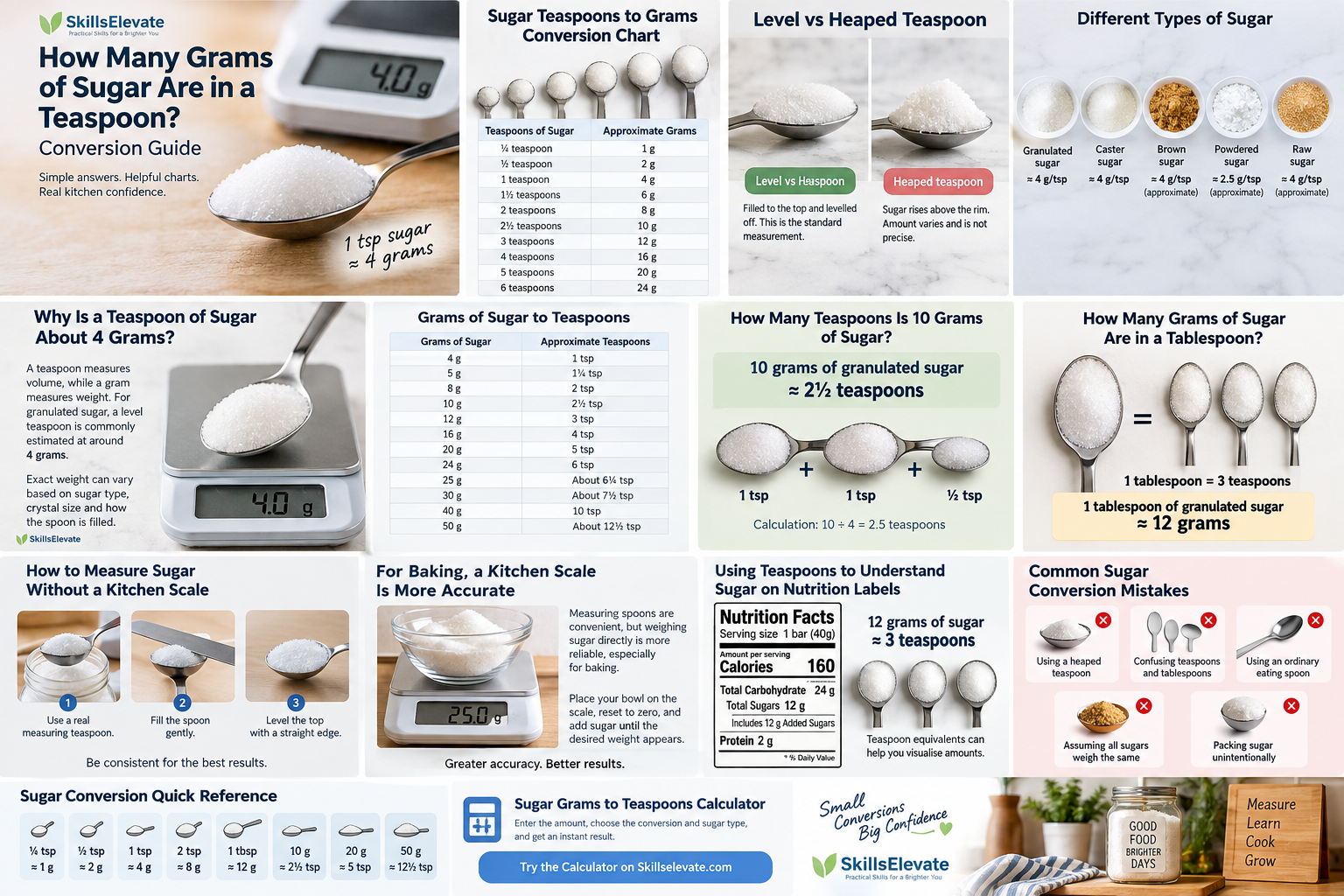
How to Measure Sugar Without a Kitchen Scale
If you do not have a scale, proper measuring spoons can provide a useful estimate for small quantities.
Avoid using an ordinary eating spoon because household spoons can differ considerably in size.
Scoop the sugar without deliberately compressing it unless the recipe specifically says to pack it.
Run a straight edge across the top so the sugar is even with the rim.
Use the same measuring technique for every spoonful.
For Baking, a Kitchen Scale Is More Accurate
Measuring spoons are convenient for small amounts, but weighing sugar directly is more reliable when accuracy matters.
This is especially useful for baking because even small differences in ingredient quantities can affect texture, moisture, spread, and consistency.
To weigh sugar, place your bowl on the scale, reset the display to zero, and add sugar until the desired gram value appears.
Using Teaspoons to Understand Sugar on Nutrition Labels
Food labels commonly list sugar in grams. Converting grams into approximate teaspoons can make the quantity easier to visualize.
These teaspoon equivalents are intended to help visualize quantities. Nutrition labels should still be read using the serving size and values provided on the package.
Common Sugar Conversion Mistakes
- Using a heaped teaspoon: the 4-gram estimate refers to a level teaspoon.
- Confusing teaspoons and tablespoons: one tablespoon equals three teaspoons.
- Using an ordinary eating spoon: it may not hold the same volume as a measuring teaspoon.
- Assuming every sugar weighs the same: powdered, brown and coarse sugars can have different weights by volume.
- Packing sugar unintentionally: compression can increase the amount that fits into the spoon.
Sugar Conversion Quick Reference
- ¼ teaspoon ≈ 1 gram
- ½ teaspoon ≈ 2 grams
- 1 teaspoon ≈ 4 grams
- 2 teaspoons ≈ 8 grams
- 1 tablespoon ≈ 12 grams
- 10 grams ≈ 2½ teaspoons
- 20 grams ≈ 5 teaspoons
- 50 grams ≈ 12½ teaspoons
For quick cooking conversions, approximately 4 grams per level teaspoon works well for granulated sugar. For precision baking or when using a different type of sugar, weighing the ingredient is the better option.
Frequently Asked Questions
How many grams of sugar are in one teaspoon?
One level teaspoon of granulated sugar is approximately 4 grams. The exact amount can vary slightly depending on the sugar and measuring method.
Is 5 grams of sugar one teaspoon?
Five grams of granulated sugar is slightly more than one teaspoon. Using 4 grams per teaspoon, 5 grams is approximately 1¼ teaspoons.
How many teaspoons is 10 grams of sugar?
Ten grams of granulated sugar is approximately 2½ teaspoons.
How many teaspoons is 20 grams of sugar?
Using approximately 4 grams per teaspoon, 20 grams is about 5 teaspoons.
How many teaspoons is 25 grams of sugar?
Twenty-five grams of granulated sugar is approximately 6¼ teaspoons.
How many teaspoons is 30 grams of sugar?
Thirty grams of granulated sugar is approximately 7½ teaspoons.
How many teaspoons is 50 grams of sugar?
Fifty grams of granulated sugar is approximately 12½ teaspoons.
Do brown sugar and white sugar weigh the same?
Not always. Brown sugar contains moisture and may be measured loosely or packed, while granulated sugar behaves differently. For accurate recipes, use the weight specified by the recipe.
Does powdered sugar weigh the same as granulated sugar?
No. Powdered sugar is much finer and generally weighs less per teaspoon than granulated sugar, so you should not automatically use the same conversion for both.
Should I use teaspoons or grams for baking?
Grams are usually more precise because a kitchen scale measures the ingredient's weight directly. Measuring spoons are convenient when exact precision is less important.