
When Was the Calculator Invented? A Short History of Calculators
When Was the Calculator Invented?
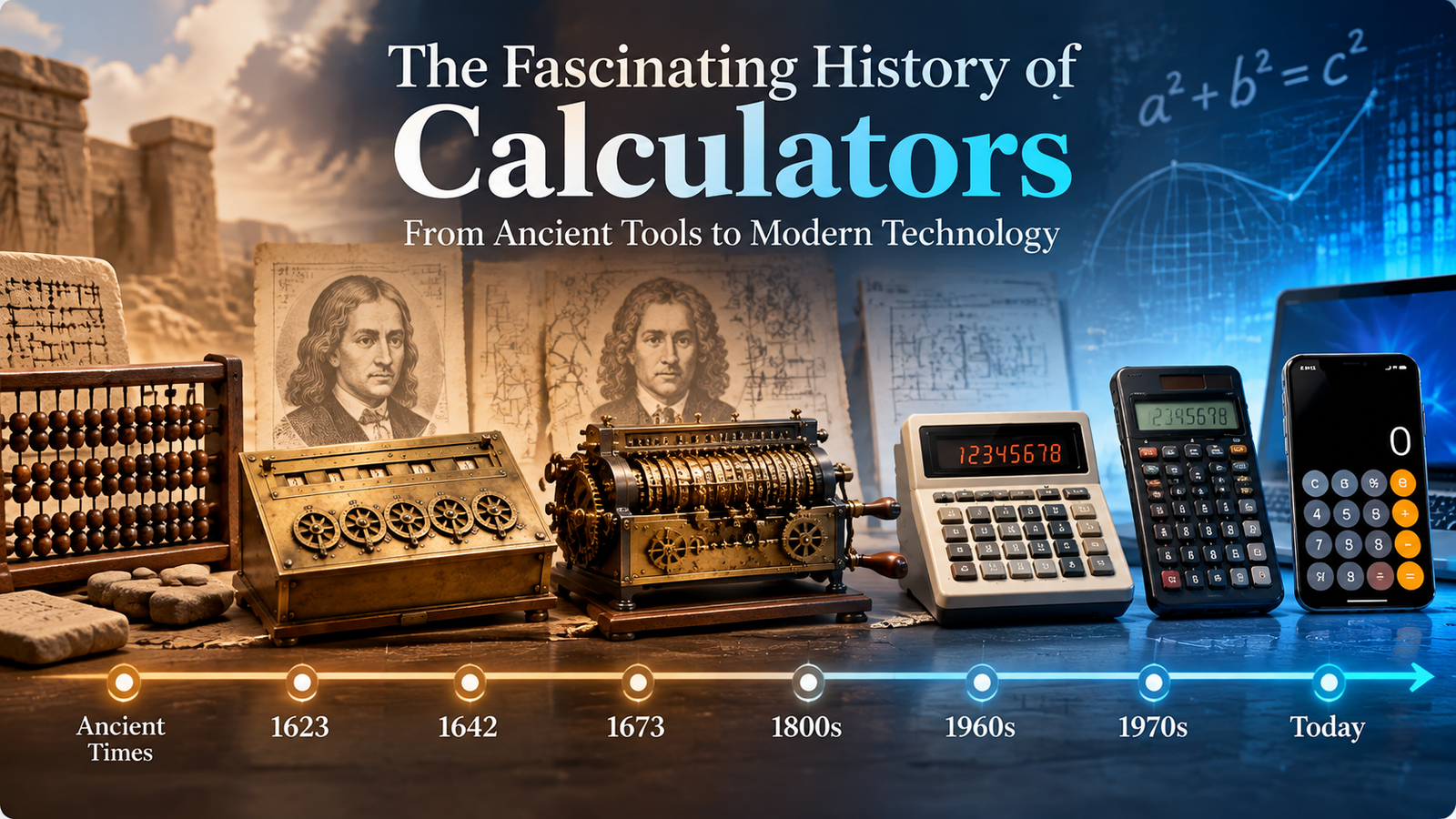
The calculator was not invented at one single moment. Instead, it developed over hundreds of years, changing from simple counting tools into mechanical machines and eventually modern electronic devices.
The first mechanical calculators appeared in the 17th century. Wilhelm Schickard created a calculating machine in 1623, and Blaise Pascal developed the Pascaline in 1642, which became one of the earliest widely recognized mechanical calculators.
Modern electronic calculators appeared much later, becoming common during the 1960s and 1970s as technology improved and electronic components became smaller and more affordable.
Before Calculators: How Did People Calculate?
Before mechanical calculators existed, people relied on different tools and methods to perform calculations.
Early calculation methods included:
- Counting with fingers and physical objects
- Counting boards
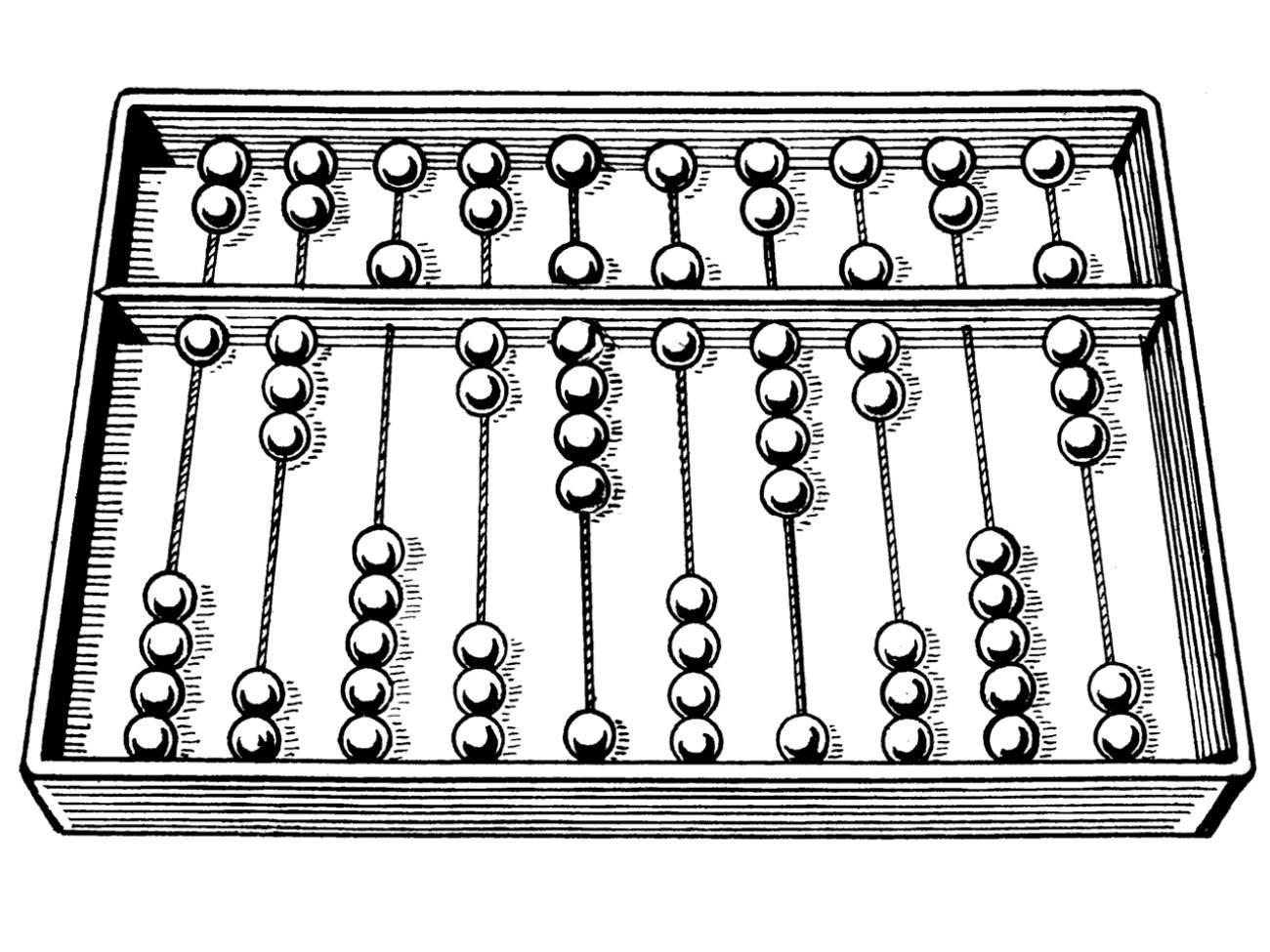
- The abacus
- Written arithmetic methods
- Mathematical tables
The abacus was one of the most important early calculation tools. It allowed users to perform addition, subtraction, multiplication, and division faster than manual counting.
However, these tools still required humans to perform many steps themselves, creating a need for machines that could automate calculations.
The First Mechanical Calculator: Wilhelm Schickard (1623)
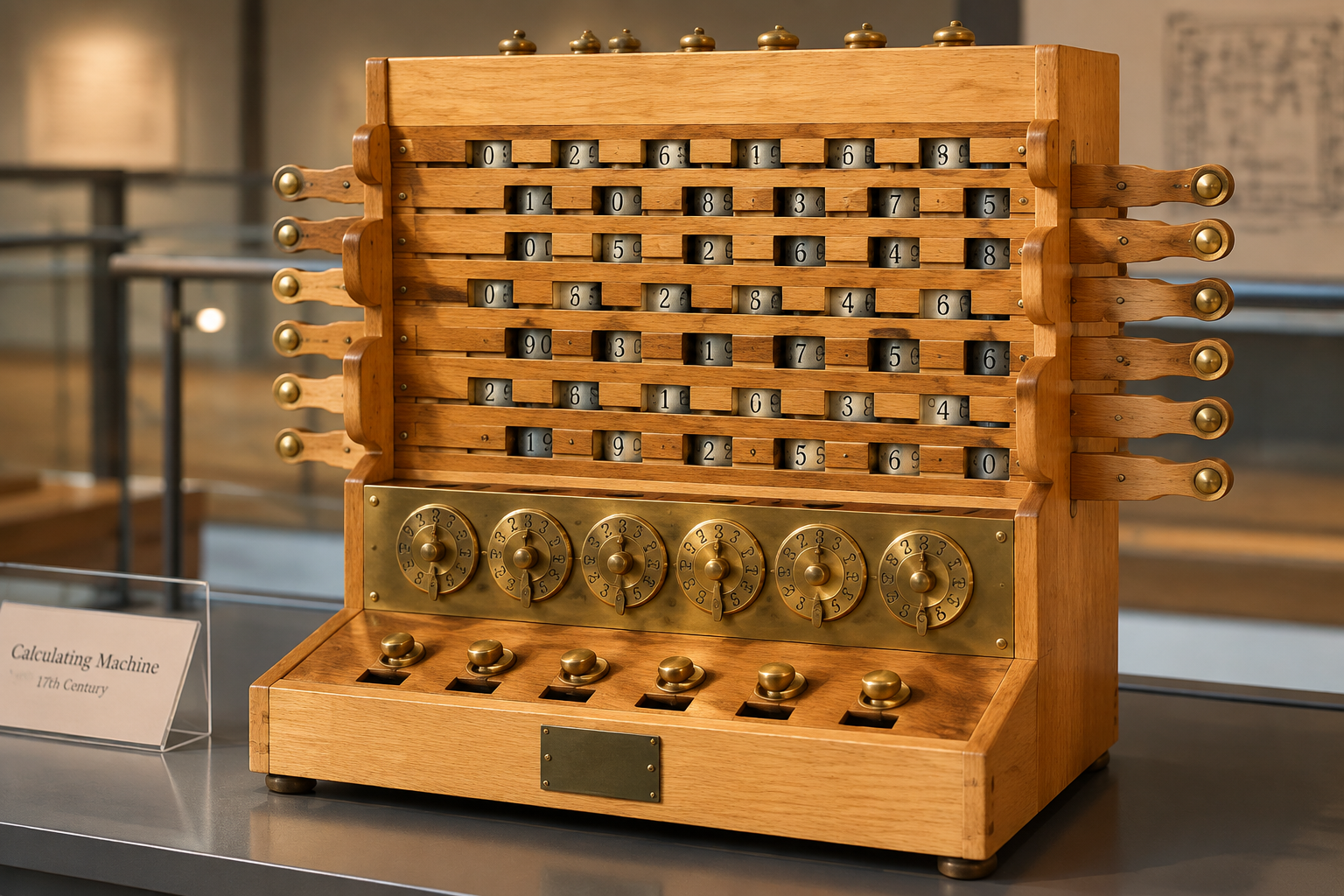
One of the earliest known mechanical calculators was created by German inventor Wilhelm Schickard in 1623.
His machine, sometimes called the Calculating Clock, used gears and mechanical parts to help perform arithmetic calculations.
It was designed to assist astronomers and mathematicians with complex calculations.
Although Schickard's machine was an important milestone, it was not produced widely and was not the only early attempt at creating an automatic calculator.
Blaise Pascal and the Pascaline (1642)
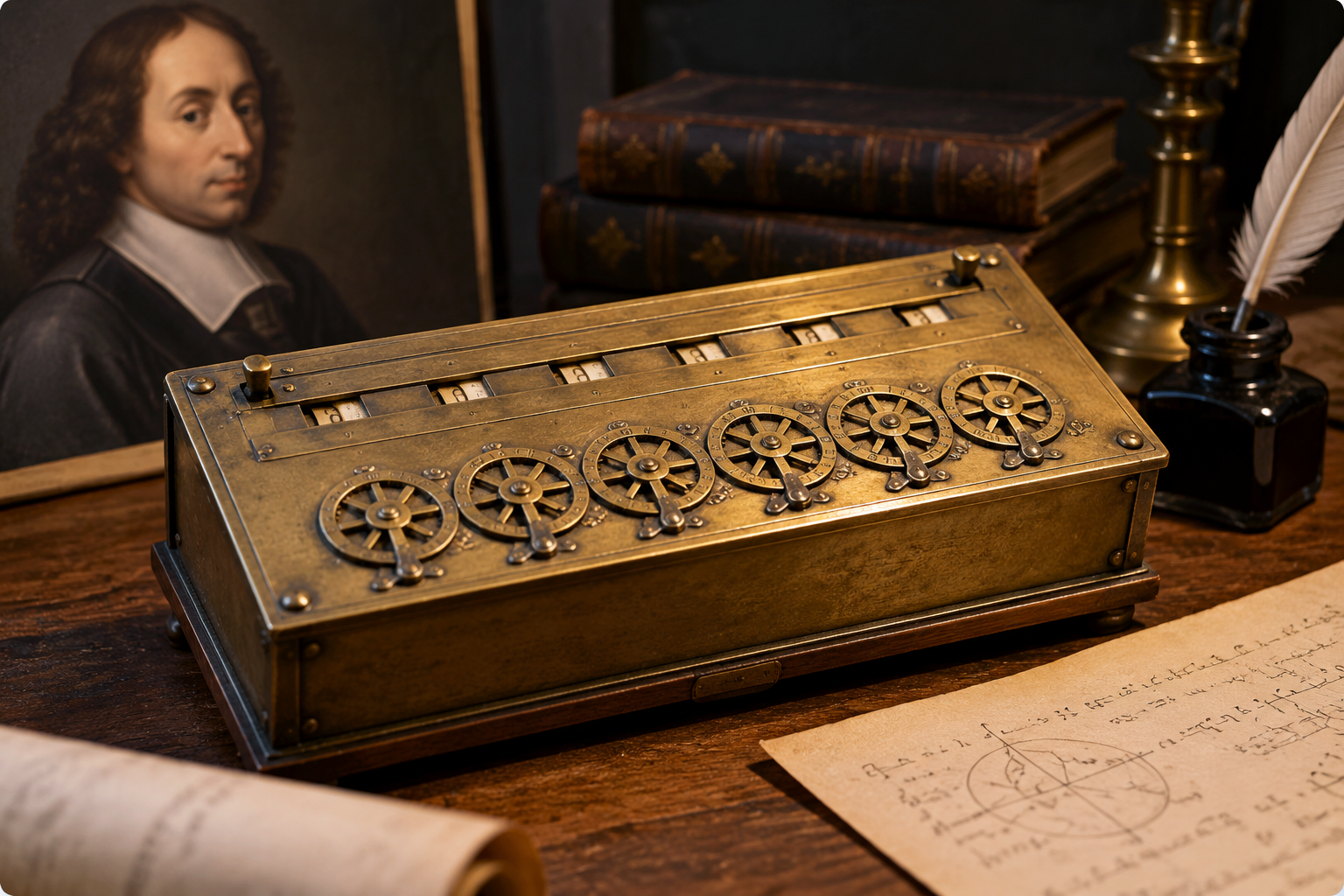
In 1642, French mathematician and inventor Blaise Pascal created the Pascaline, one of the most famous early mechanical calculators.
Pascal designed the machine to help his father, who worked as a tax administrator and needed to perform many calculations.
The Pascaline could perform addition and subtraction using a series of gears and wheels.
Although it was limited compared with modern calculators, it proved that machines could assist humans with mathematical work.
How Mechanical Calculators Improved Over Time
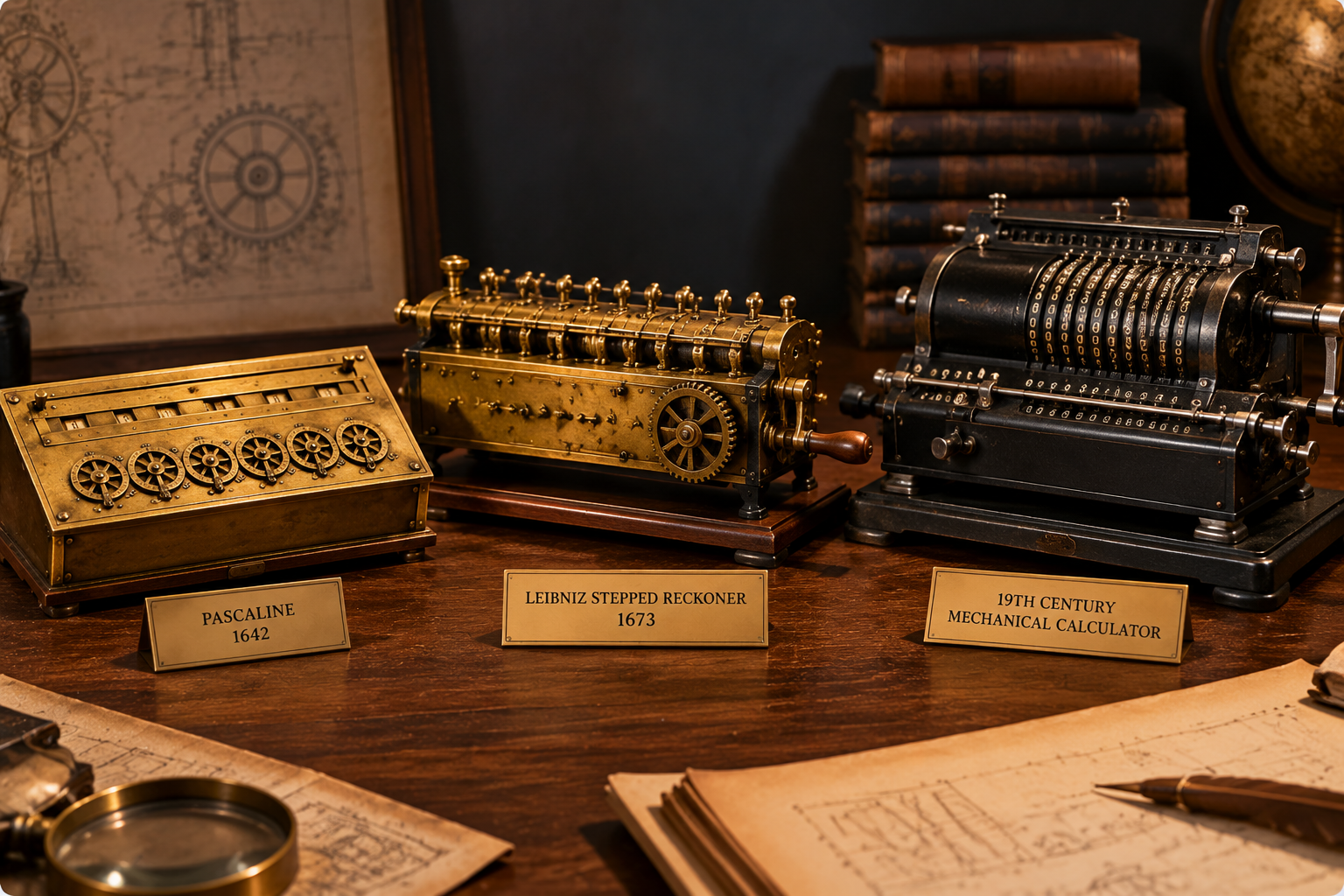
After Pascal's invention, many inventors continued improving mechanical calculators.
Important developments included:
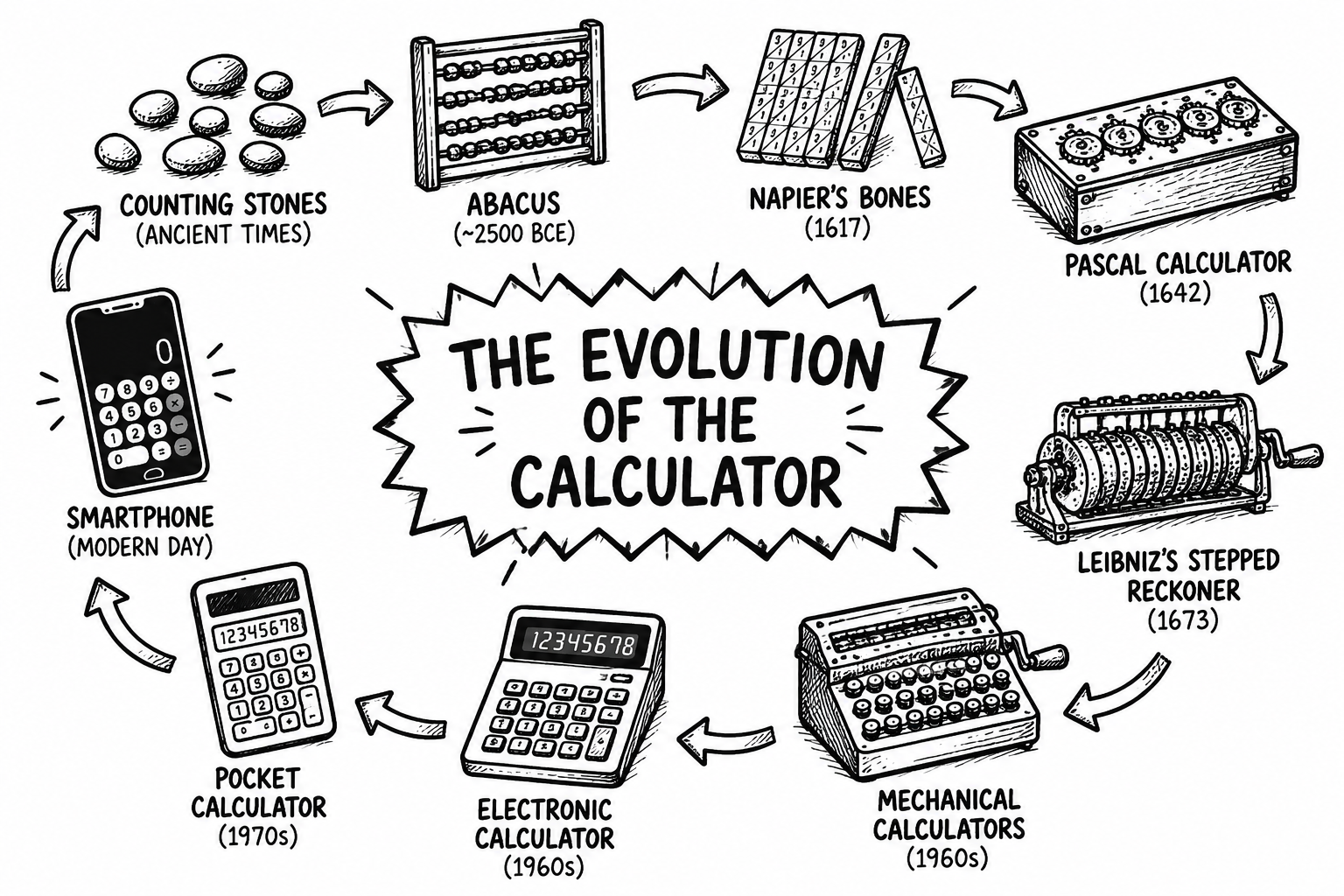
Gottfried Leibniz's Stepped Reckoner (1673)
German mathematician Gottfried Leibniz created a machine that could perform more advanced calculations, including multiplication and division.
1800s Mechanical Calculators
During the 19th century, manufacturers developed more practical calculating machines for:
- Businesses
- Banks
- Engineers
- Scientists
These machines became larger but more reliable.
The Birth of Electronic Calculators
Mechanical calculators dominated for centuries, but the development of electronics changed everything.
During the 20th century, calculators began using:
- Electronic circuits
- Transistors
- Integrated circuits
- Digital displays
Electronic calculators were faster, smaller, and more reliable than mechanical versions.
By the 1960s, companies began producing electronic calculators for businesses and professionals.
The Pocket Calculator Revolution
The 1970s changed how people used calculators.
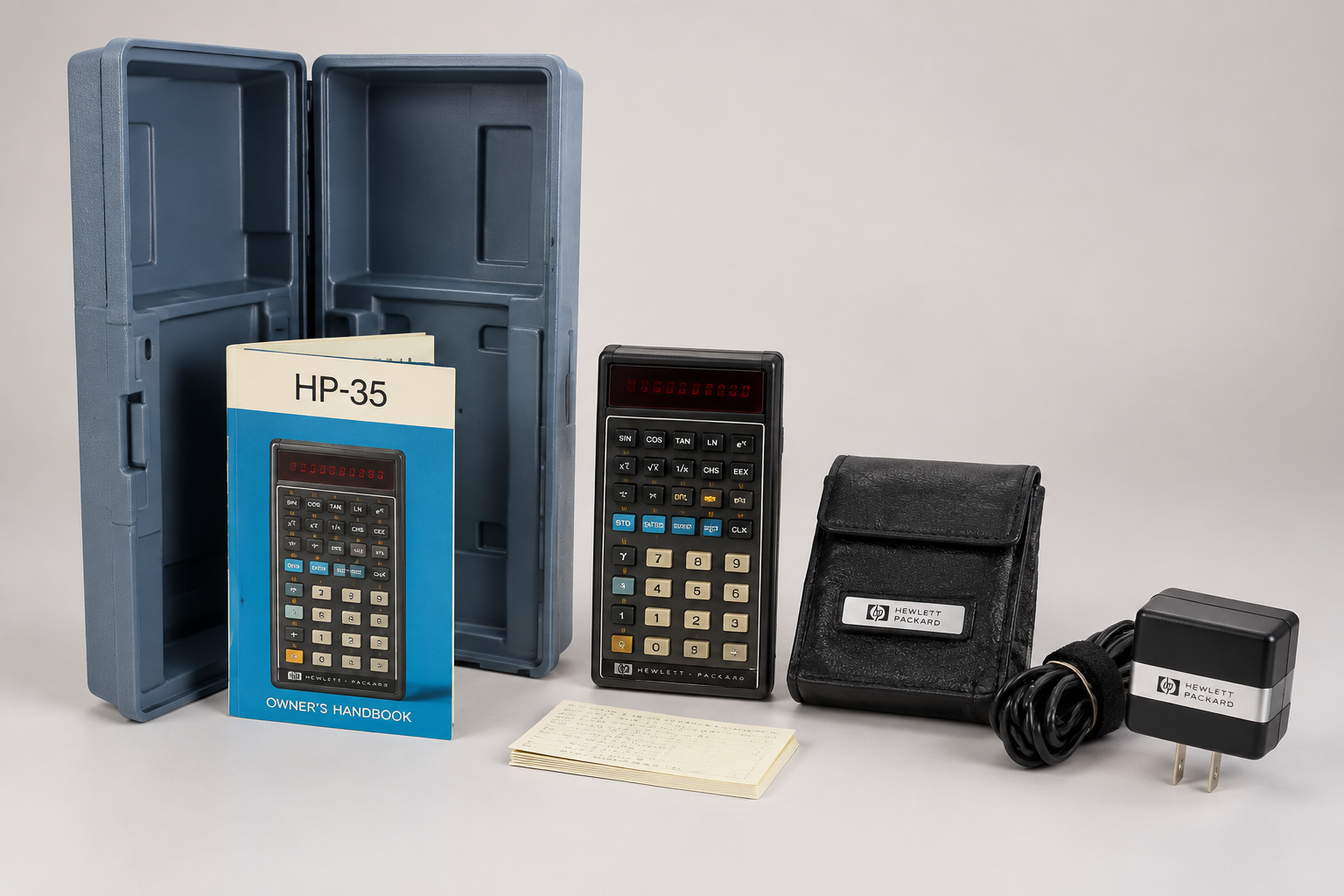
Advances in microchip technology allowed manufacturers to create small handheld calculators that people could carry anywhere.
Companies such as:
- Texas Instruments
- Casio
- Hewlett-Packard
introduced popular electronic calculators for students, professionals, and everyday users.
How Calculators Changed From Then to Today
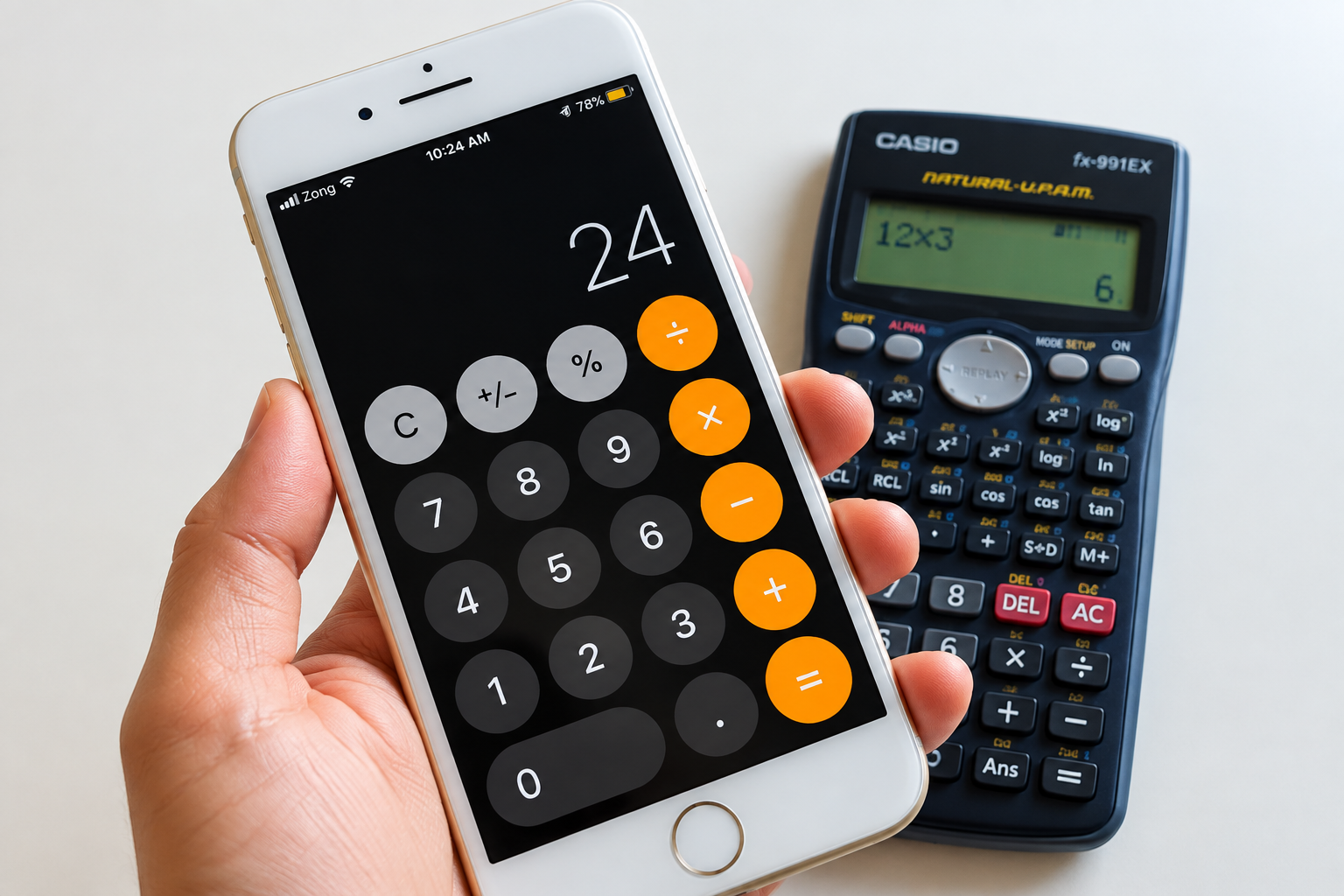
Modern calculators are far more advanced than early mechanical machines.
Today's calculators include:
- Scientific calculations
- Graphing functions
- Programming features
- Financial calculations
- Smartphone calculator apps
A calculator that once required hundreds of mechanical parts can now fit inside a phone and perform millions of calculations instantly.
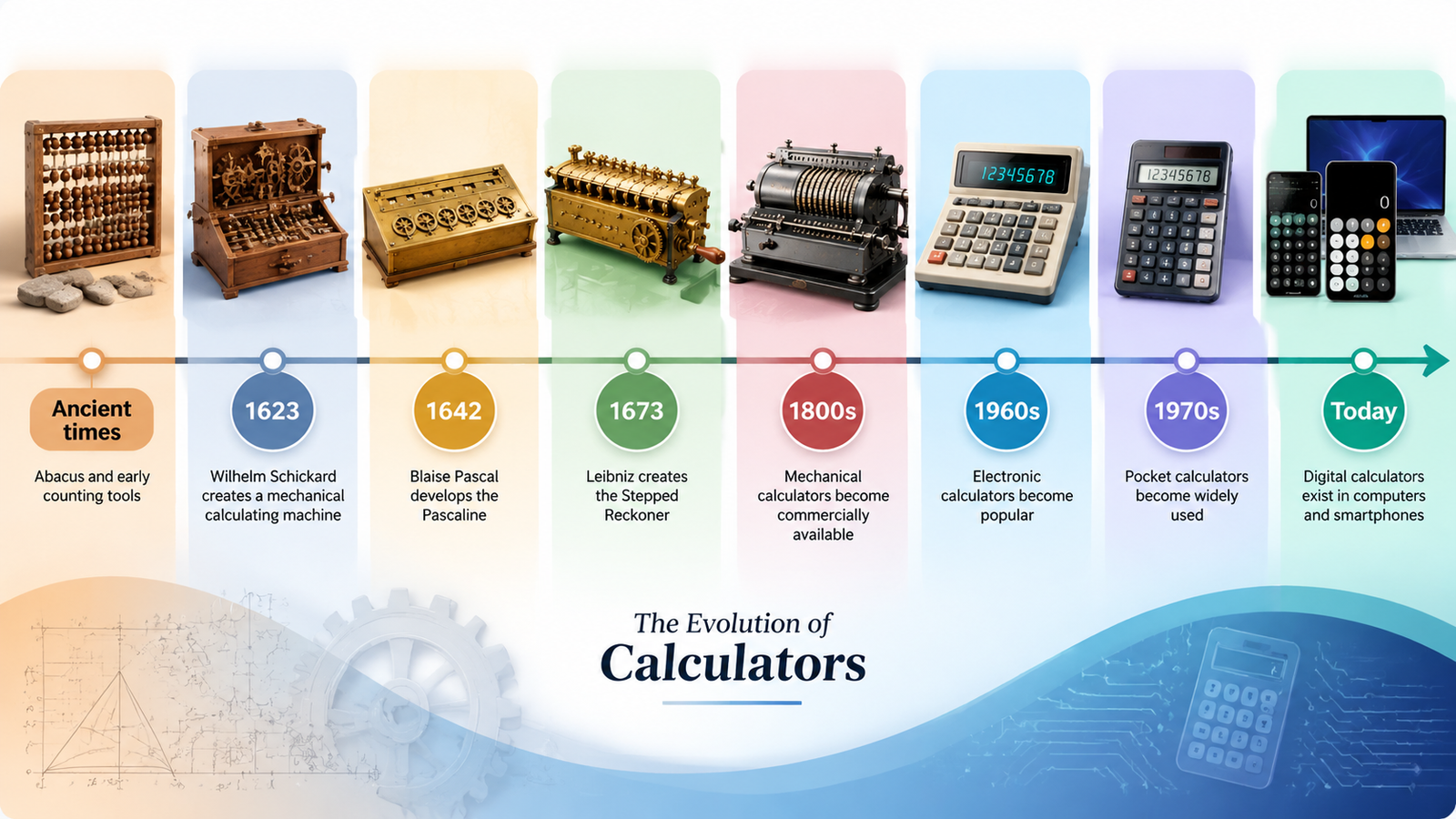
Calculator Invention Timeline
| Year | Development |
|---|---|
| Ancient times | Abacus and early counting tools |
| 1623 | Wilhelm Schickard creates a mechanical calculating machine |
| 1642 | Blaise Pascal develops the Pascaline |
| 1673 | Leibniz creates the Stepped Reckoner |
| 1800s | Mechanical calculators become commercially available |
| 1960s | Electronic calculators become popular |
| 1970s | Pocket calculators become widely used |
| Today | Digital calculators exist in computers and smartphones |
Frequently Asked Questions
When was the first calculator invented?
The first known mechanical calculator was created in 1623 by Wilhelm Schickard. Blaise Pascal later created the Pascaline in 1642, which became one of the most recognized early calculators.
Who invented the calculator?
Several inventors contributed to calculator development. Wilhelm Schickard and Blaise Pascal created early mechanical calculators, while many later engineers developed electronic versions.
Was the abacus the first calculator?
The abacus was not a mechanical calculator, but it was one of the earliest tools used to help people perform calculations.
When did electronic calculators become common?
Electronic calculators became popular during the 1960s and 1970s as electronic components became smaller and cheaper.
Final Thoughts: The Evolution of Calculators
The calculator was not created through one single invention. It evolved from simple counting tools into mechanical machines and finally into powerful digital devices.
From the abacus to modern smartphone apps, calculators represent centuries of human effort to make mathematics faster, easier, and more accessible.
Understanding when the calculator was invented means understanding a long journey of innovation that continues today.