
21 Years Ago From Today
Find out the exact date and time 21 years ago from today, live-updating — plus a general calculator for any number of minutes, hours, days, weeks, months, or years.
What Date Was 21 Years Ago From Today?
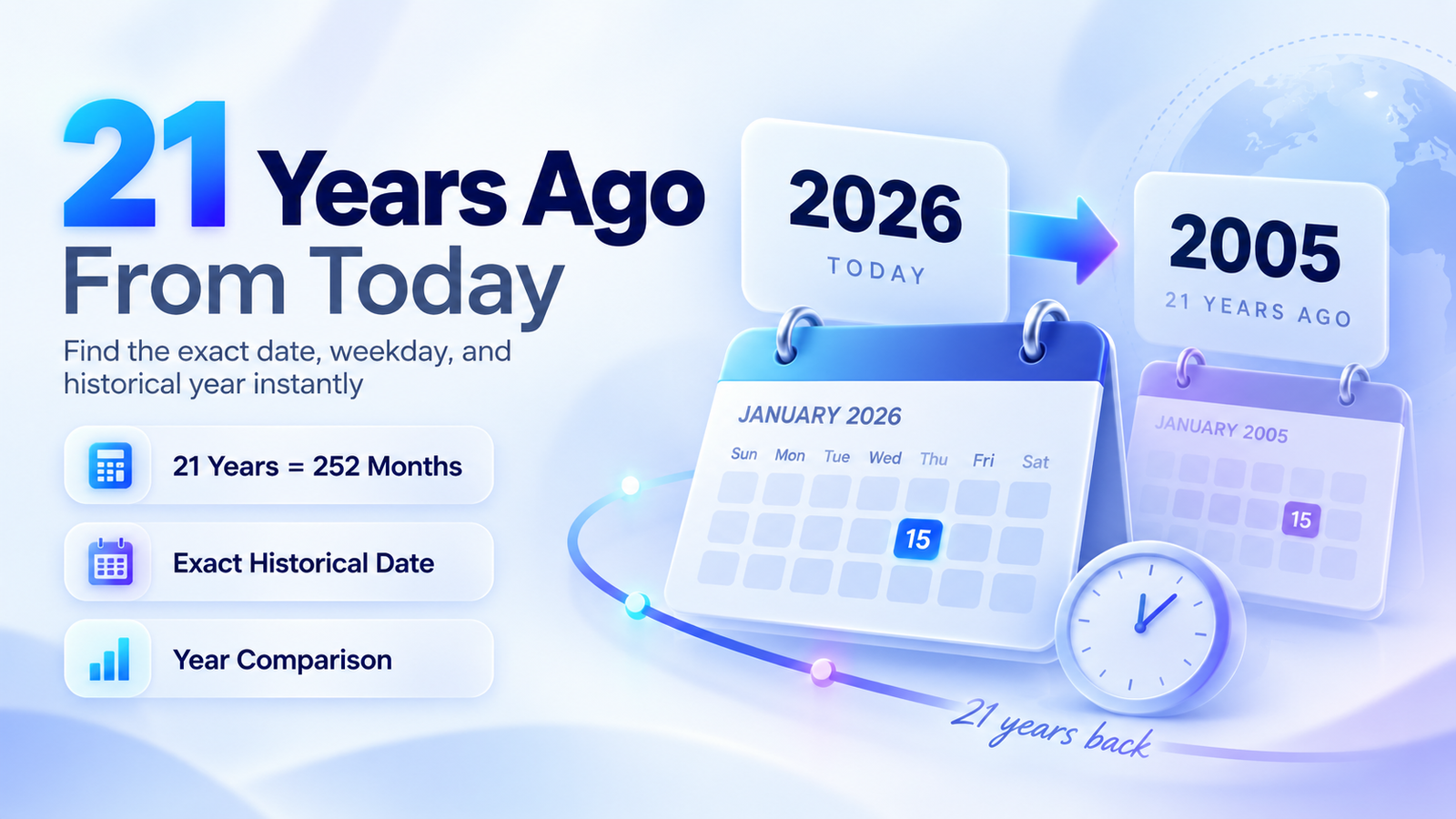
The calculator above shows the exact date, weekday, and historical year 21 years ago from today.
No input is required for the default result. The tool automatically uses today's local date and subtracts exactly 21 calendar years.
It also shows the actual number of elapsed days, because a 21-year period includes leap years and should not be calculated as simply 21 × 365.
What Year Was 21 Years Ago?
To find the year, subtract 21 from the starting year.
The calculator does this automatically and displays both the starting year and historical year clearly.
This is useful when you only need to check a past year for an old record, milestone, anniversary, purchase, education date, or employment history.
21 Years Equals 252 Months
There are 12 months in one calendar year.
21 × 12 = 252
So:
21 years = 252 months
This conversion is fixed, even though the exact number of elapsed days can vary because of leap years.
How Many Days Are in 21 Years?
There is no single fixed day count that works for every 21-year period.
A normal year has 365 days, while a leap year has 366 days.
Because a 21-year interval normally crosses several leap years, multiplying 21 by 365 would not give the exact answer.
The calculator counts the real calendar days between the starting date and historical date and displays the exact elapsed total.
Why Leap Years Matter
Leap years add an extra day to February.
Over a long period such as 21 years, these additional days affect the total elapsed-day count.
The calculator follows normal Gregorian calendar rules automatically, so you do not need to identify the leap years yourself.
What Happens If the Starting Date Is February 29?
February 29 does not exist every year.
If the starting date is February 29 and the historical target year is not a leap year, the calculator uses:
February 28
If this happens, the tool displays a leap-day adjustment notice rather than silently changing the date.
Does the Weekday Stay the Same After 21 Years?
Not necessarily.
Subtracting full calendar years does not guarantee that the result will fall on the same weekday.
Leap years and normal 365-day years shift weekdays over time.
That is why the calculator displays both the starting weekday and historical weekday.
Can I Calculate 21 Years From Another Date?
Yes.
Choose a different Starting Date and the calculator will find the date exactly 21 calendar years before it.
For example, you can use it to check a date related to:
- Birthdays
- Anniversaries
- Education records
- Employment history
- Property records
- Old purchases
- Business milestones
- Historical events
- Personal records
You can also change the number of years.
Can I Calculate a Future Date Instead?
Yes.
Change the direction from Ago to From Today.
The calculator will then add the selected number of calendar years instead of subtracting them.
This makes the same tool useful for both historical and future-year calculations.
Can I Change 21 Years to Another Number?
Yes.
Enter another number in the Number of Years field.
For example, you can calculate 10, 15, 20, 25, or more years before or after the selected starting date.
The result updates automatically.
What Information Does the Calculator Show?
Along with the exact historical date, the tool provides useful supporting details such as:
Historical year
Starting weekday
Historical weekday
Total months
Exact elapsed days
Weeks plus days
ISO week
Day of year
Quarter
These details are kept below the main result so the exact date remains easy to find.
Date Format Options
You can display the calculated date in several common formats, including:
September 19, 2005
19 September 2005
09/19/2005
19/09/2005
2005-09-19
Choose the format that is easiest for you to read or copy.
Use the Historical Calendar
The result calendar highlights the calculated historical date inside its month.
You can move to the previous or next month using the calendar arrows without changing the calculated result.
This is useful when you want to see where the historical date falls within the month.
Common Uses for a 21 Years Ago Calculator
A 21-year date calculation can help when reviewing old records or checking when something happened.
Common uses include personal milestones, birthdays, anniversaries, employment dates, education records, property documents, historical research, photos, social posts, business records, purchases, and age-related date checks.
Using the calculator avoids mistakes caused by manually subtracting years and dealing with leap years.
Frequently Asked Questions
What date was 21 years ago from today?
The exact date depends on today's date. The calculator above automatically subtracts 21 calendar years and shows the full historical date.
What year was 21 years ago?
Subtract 21 from the starting year. The calculator displays the historical year automatically.
How many months are in 21 years?
21 years = 252 months.
Is 21 years exactly 7,665 days?
Not always. That calculation assumes every year has 365 days and ignores leap years. The exact number of days depends on the specific 21-year interval.
Does the calculator include leap years?
Yes. Leap years are automatically included when calculating the exact historical date and elapsed-day count.
What happens to February 29?
If February 29 does not exist in the target year, the calculator uses February 28 and displays an adjustment notice.
Does the weekday stay the same 21 years earlier?
Not necessarily. The weekday can change because normal and leap years shift the calendar differently.
Can I calculate 21 years ago from another date?
Yes. Choose any starting date and the calculator will update automatically.
Can I calculate more or fewer than 21 years?
Yes. Change the number of years in the custom calculator.
Can I calculate years into the future?
Yes. Change the direction to From Today.
Related Year Calculations
If you want to compare nearby historical dates, these existing tools are useful: