
Tire Size Calculator – Compare Tire Sizes, Diameter & Speedometer
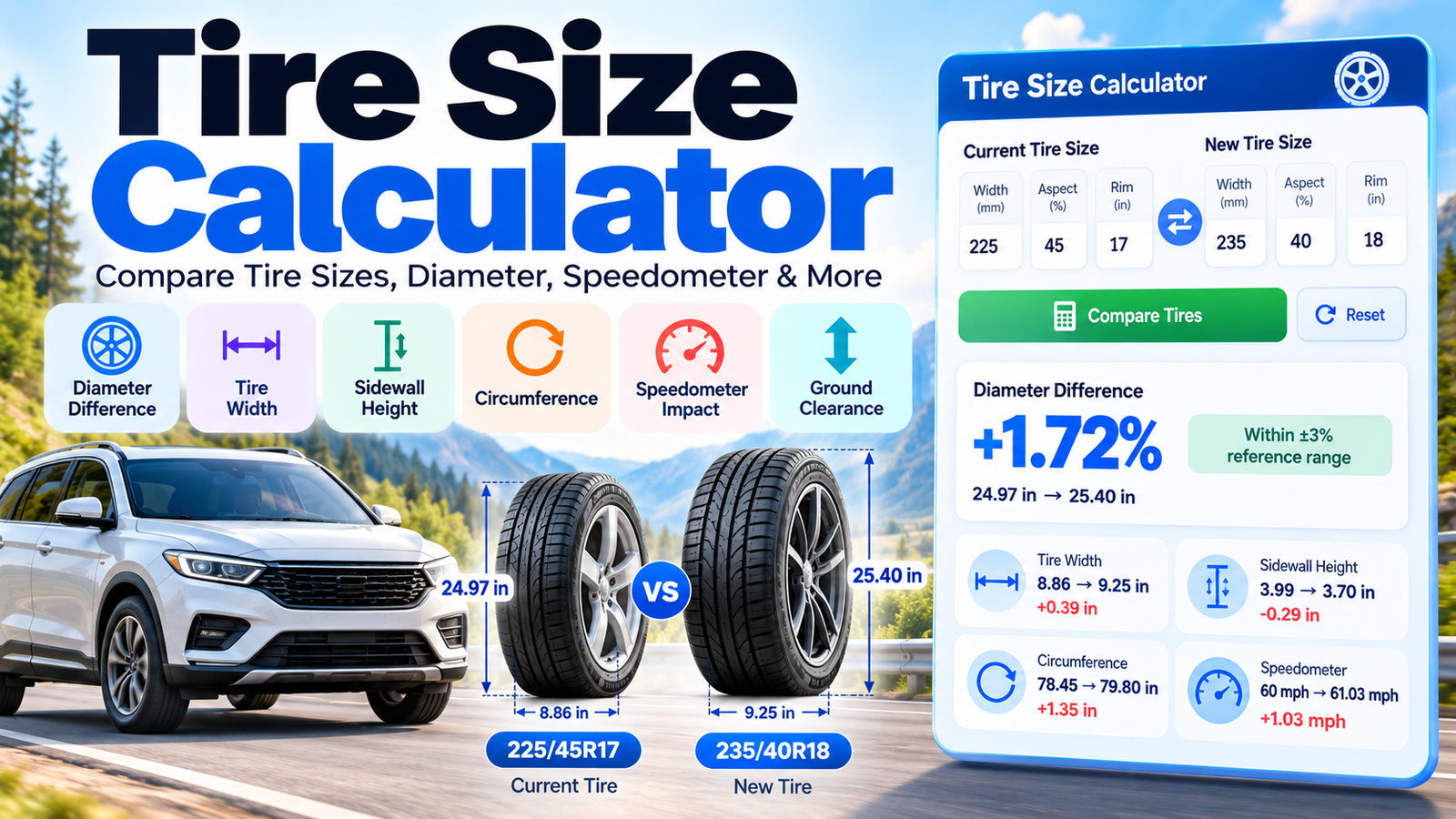
Use our Tire Size Calculator to compare your current tire size with a new tire size and quickly understand how the change may affect your vehicle.
Enter the tire width, aspect ratio, and rim diameter for both tires. The calculator automatically compares overall diameter, section width, sidewall height, circumference, revolutions per mile, ground clearance, and estimated speedometer difference.
It is useful when checking replacement tires, changing wheel sizes, or comparing alternative tire sizes before buying.
How to Use the Tire Size Calculator
Enter the three numbers shown on your current tire.
For example:
225/45R17
This means:
- 225 = tire width in millimeters
- 45 = sidewall height as a percentage of tire width
- R17 = tire fits a 17-inch wheel
Next, enter the size of the tire you want to compare.
For example:
235/40R18
The calculator updates automatically and shows how the new tire differs from your current one.
What Does a Tire Size Mean?
A tire size such as 225/45R17 contains three important measurements.
Tire Width
The first number is the width of the tire in millimeters.
For:
225/45R17
the tire width is:
225 mm
Aspect Ratio
The second number shows the sidewall height as a percentage of the tire width.
In:
225/45R17
the aspect ratio is:
45%
So the sidewall height is:
225 × 45% = 101.25 mm
Rim Diameter
The final number tells you the wheel diameter in inches.
In:
225/45R17
the tire is designed for a:
17-inch wheel
Tire Diameter Calculator
Overall tire diameter is one of the most important measurements when comparing tire sizes.
The formula is:
Overall Diameter = Wheel Diameter + Two Sidewalls
Because wheel diameter is listed in inches and tire width is listed in millimeters, the wheel size must first be converted to millimeters.
Example: 225/45R17
Sidewall height:
225 × 0.45 = 101.25 mm
Wheel diameter:
17 × 25.4 = 431.8 mm
Overall diameter:
431.8 + 101.25 + 101.25 = 634.3 mm
The calculator performs this automatically for both tires.
Compare Tire Diameter
The calculator shows both tire diameters and the percentage difference between them.
For example:
Current Tire: 24.97 inNew Tire: 25.40 in
The tool then displays the percentage change.
A larger diameter means the tire travels slightly farther during each wheel revolution. A smaller diameter travels slightly less distance per revolution.
This difference can affect the speedometer reading and vehicle ride height.
Tire Size Difference Percentage
The tire size difference percentage compares the overall diameter of the new tire with the current tire.
A result may look like:
+1.7%
This means the new tire's overall diameter is approximately 1.7% larger.
The calculator also displays whether the result falls within a commonly used ±3% comparison reference.
This should only be treated as a general size-comparison guide. It does not confirm that a tire will physically fit a specific vehicle.
Tire Width Comparison
The calculator also compares the section width of both tires.
For example:
225 mm → 235 mm
Difference:
+10 mm
A wider tire may require additional wheel and suspension clearance.
Actual installed tire width can also vary slightly depending on the tire manufacturer, tire model, and wheel width.
Sidewall Height Calculator
The sidewall is calculated from the tire width and aspect ratio.
The formula is:
Sidewall Height = Tire Width × Aspect Ratio ÷ 100
For:
225/45R17
the calculation is:
225 × 45 ÷ 100 = 101.25 mm
The Tire Size Calculator compares the sidewall height of both tires so you can see whether the replacement tire has a taller or shorter sidewall.
Tire Circumference Calculator
Tire circumference is the distance around the outside of the tire.
The formula is:
Circumference = π × Tire Diameter
A larger circumference means the vehicle travels farther during each tire revolution.
The calculator automatically compares the circumference of the current and new tire.
Revolutions Per Mile
Revolutions per mile tells you approximately how many times a tire rotates while traveling one mile.
A smaller tire usually makes more revolutions per mile.
A larger tire usually makes fewer revolutions per mile.
The calculator displays both values so you can easily compare them.
How Tire Size Affects the Speedometer
Changing overall tire diameter can affect the relationship between wheel rotation and the speed shown on the speedometer.
The calculator uses:
Actual Speed = Indicated Speed × New Tire Diameter ÷ Current Tire Diameter
For example, if you enter:
60 mph
the calculator estimates the actual road speed with the new tire size.
If the replacement tire is larger, actual speed may be slightly higher than the indicated speed.
If the replacement tire is smaller, actual speed may be slightly lower.
Speedometer Tire Size Calculator
Use the Speedometer Impact section to enter a speedometer reading such as:
60 mph
or:
100 km/h
The calculator then displays the estimated actual speed based on the difference between the two tire diameters.
This can help you understand how changing tire size may affect your speedometer reading.
Ground Clearance Change
Changing tire diameter can also change the vehicle's approximate ground clearance.
The calculation is:
Ground Clearance Change = Diameter Difference ÷ 2
For example, if the new tire is:
0.40 inches taller overall
the approximate increase in ground clearance is:
0.20 inches
The calculator shows this automatically.
Metric and Inches
The Tire Size Calculator lets you view calculated dimensions in:
Millimeters
or:
Inches
The standard tire size inputs remain in the normal format used on tire sidewalls.
For example:
225/45R17
This makes it easy to compare tire specifications regardless of which measurement system you normally use.
Visual Tire Size Comparison
The visual comparison helps you see the relative difference between the current and replacement tire.
You can use:
Side by Side
or:
Overlay
to compare the calculated overall tire diameters.
The visual is intended as a quick reference. Actual tire shape and dimensions may vary between manufacturers.
Can a Tire Size Calculator Confirm Fitment?
No. A tire size calculator compares dimensions, but it cannot confirm complete vehicle fitment.
Actual fitment can also depend on:
- Wheel width
- Wheel offset
- Suspension clearance
- Fender clearance
- Brake clearance
- Vehicle load requirements
- Tire load rating
- Tire speed rating
- Manufacturer specifications
Always check your vehicle and tire manufacturer recommendations before installing a different tire size.
Why Can Actual Tire Dimensions Be Different?
The dimensions calculated by the tool are based on standard tire-size formulas.
Real tires may measure slightly differently because of:
manufacturer design, tread pattern, wheel width, tire pressure, tire model, and manufacturing tolerances.
For this reason, use calculated dimensions for comparison and check the actual tire manufacturer's specifications when exact clearance is important.
Example Tire Size Comparison
Suppose your current tire is:
225/45R17
and you are considering:
235/40R18
The Tire Size Calculator compares:
- Overall diameter
- Tire width
- Sidewall height
- Circumference
- Revolutions per mile
- Ground clearance
- Speedometer difference
Instead of calculating each measurement manually, you can see all important differences in one place.
Frequently Asked Questions
What is a Tire Size Calculator?
A Tire Size Calculator compares tire dimensions and shows how changing tire size affects diameter, width, sidewall, circumference, revolutions, ground clearance, and speedometer readings.
How do I read a tire size?
For 225/45R17, 225 is tire width in millimeters, 45 is the aspect ratio, and 17 is the wheel diameter in inches.
Does changing tire size affect the speedometer?
Yes. Changing overall tire diameter can change the distance traveled per wheel revolution, which may cause the actual speed to differ from the indicated speed.
Does a bigger tire increase ground clearance?
Usually, yes. The approximate ground-clearance increase is half of the overall tire-diameter increase.
What does a positive diameter difference mean?
A positive percentage means the replacement tire is larger in overall diameter than the current tire.
What does a negative diameter difference mean?
A negative percentage means the replacement tire is smaller in overall diameter.
Is a 3% tire size difference always safe?
No. The ±3% figure is only a general comparison reference. Vehicle-specific fitment, clearance, load rating, wheel size, and manufacturer recommendations must still be checked.
Can I compare tire sizes in millimeters and inches?
Yes. The calculator lets you switch calculated results between metric and inches.
Compare Your Tire Sizes
Use the Tire Size Calculator to quickly compare your current tire with a replacement size.
Enter both tire sizes to see:
Diameter Difference
Width Difference
Sidewall Height
Circumference
Revolutions per Mile
Ground Clearance Change
and:
Estimated Speedometer Difference
This makes it easier to understand how two tire sizes differ before making a replacement or wheel-size decision.