
US Gallon vs Imperial Gallon: Size, Difference and Conversions
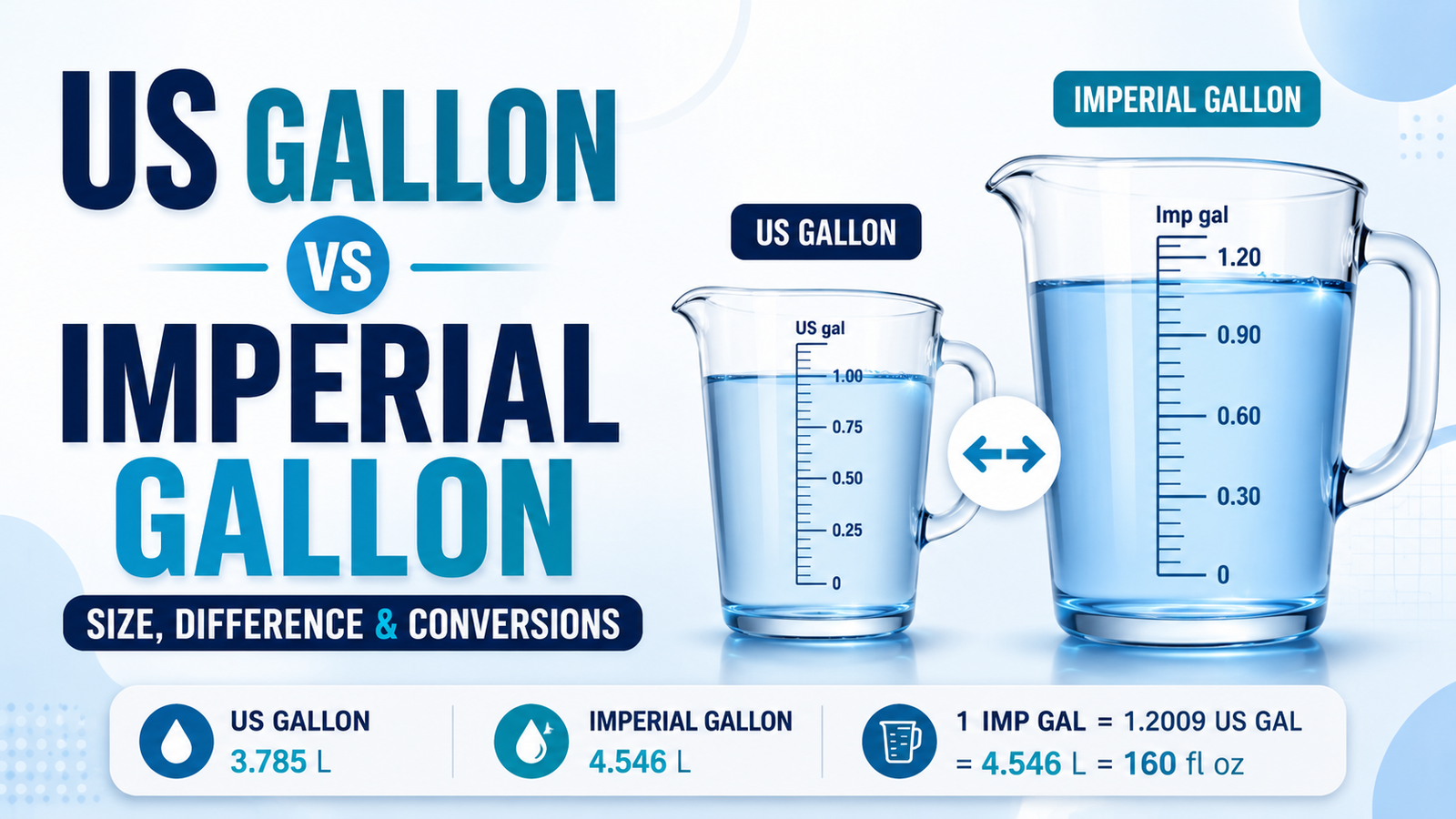
A gallon is not always the same volume. Learn the exact difference between US and Imperial gallons, convert both to liters, and avoid common mistakes with fuel, tanks, recipes, and product specifications.
The quick answer
1 US liquid gallon = 3.785 liters. 1 Imperial gallon = 4.546 liters. The Imperial gallon is larger: it holds about 20% more volume than a US liquid gallon.
US liquid gallon
1 US gal = 3.785411784 L
Used primarily in the United States for everyday liquid volume.
Imperial gallon
1 Imperial gal = 4.54609 L
Used in British Imperial measurement contexts and many historical specifications.
What is a gallon?
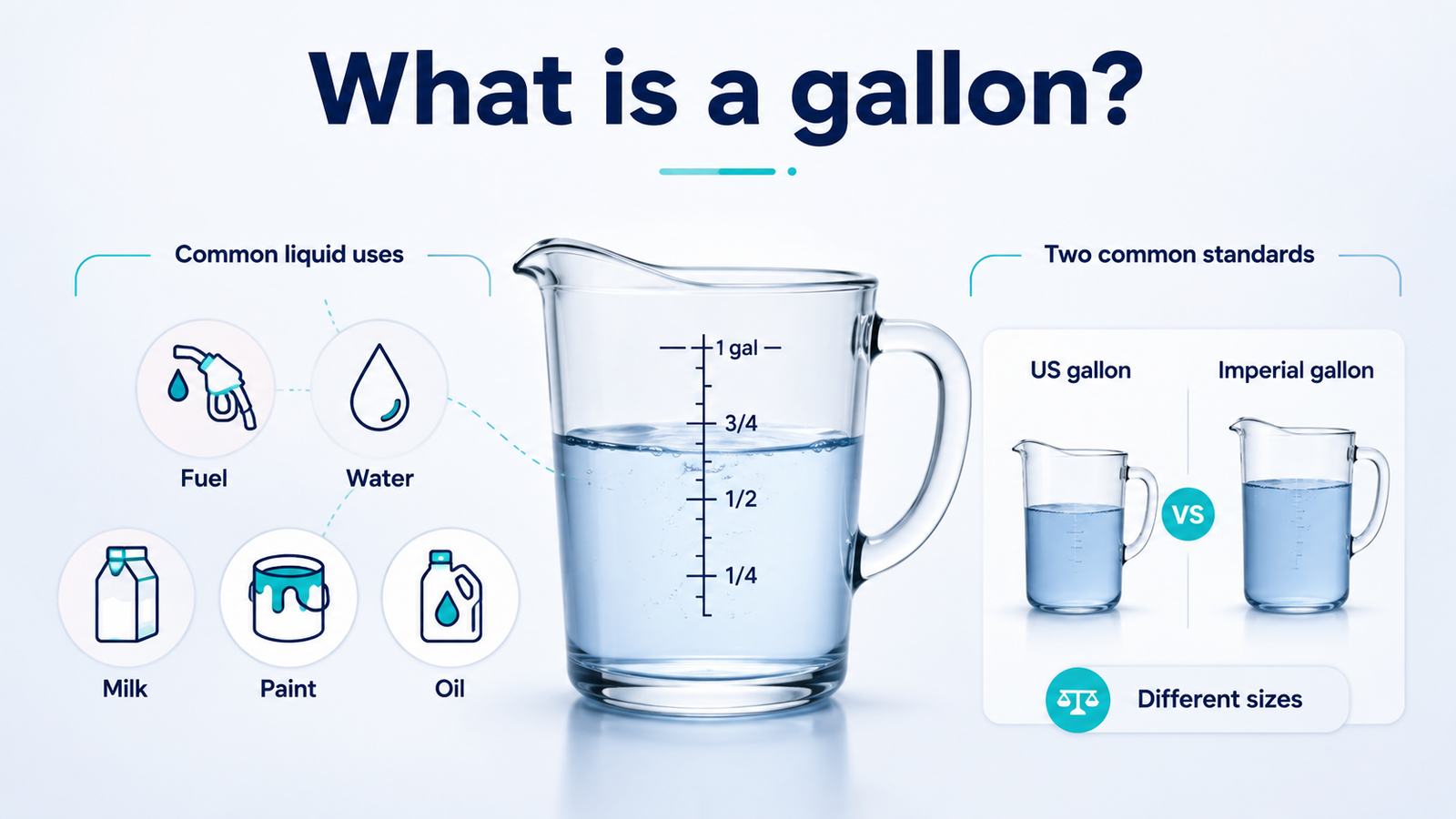
A gallon is a unit of volume, usually used to describe liquids such as fuel, water, milk, paint, oil, and the capacity of tanks or containers. The important detail is that the word “gallon” does not identify one universal volume.
In everyday conversion questions, the two standards that matter most are the US liquid gallon and the Imperial gallon. They share a name, but they have different sizes. Always identify the system before multiplying, comparing specifications, or judging fuel economy.
Accuracy first
Do not write “1 gallon = 3.785 liters” without qualification. That value specifically means one US liquid gallon. An Imperial gallon is larger.
What is a US gallon?
The US liquid gallon is the standard gallon used in the United States for common liquid measurements. It is exactly 231 cubic inches, which equals 3.785411784 liters. It is the gallon you will usually see on US fuel pumps, water containers, automotive fluid labels, and household products.
- 1 US liquid gallon = 4 US quarts.
- 1 US liquid gallon = 8 US pints.
- 1 US liquid gallon = 128 US fluid ounces.
What is an Imperial gallon?
The Imperial gallon belongs to the British Imperial system. It is exactly 4.54609 liters, making it noticeably larger than a US liquid gallon. You may encounter it in older UK materials, international vehicle specifications, fuel-economy discussions, or products using Imperial terminology.
- 1 Imperial gallon = 4 Imperial quarts.
- 1 Imperial gallon = 8 Imperial pints.
- 1 Imperial gallon = 160 Imperial fluid ounces.
US gallon vs Imperial gallon
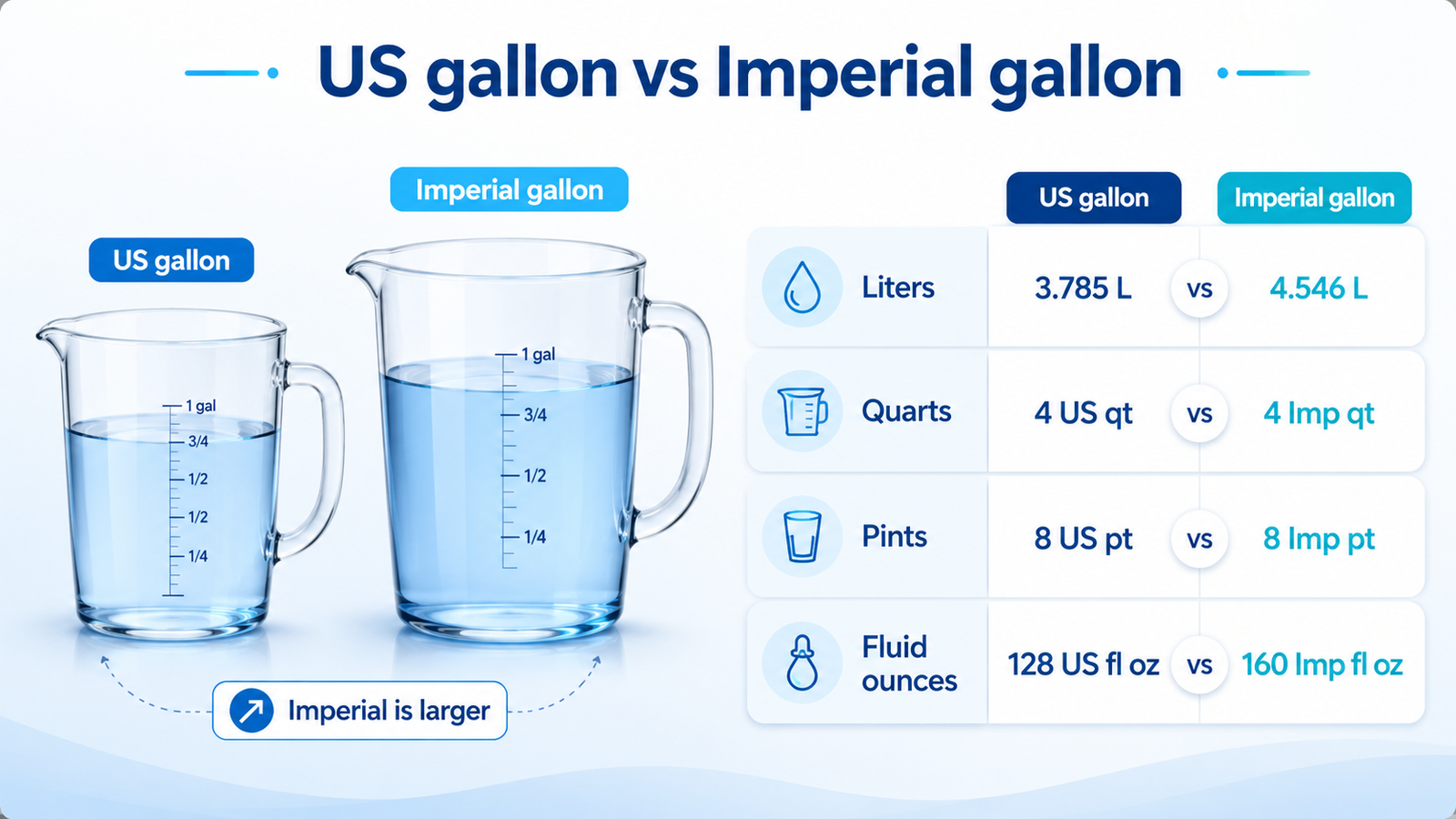
The unit names quart, pint, and fluid ounce exist in both systems, but their actual volumes are not identical. Keep every part of a conversion in the same measurement system.
| Measurement | US gallon | Imperial gallon |
|---|---|---|
| Liters | 3.785 L | 4.546 L |
| Quarts | 4 US qt | 4 Imperial qt |
| Pints | 8 US pt | 8 Imperial pt |
| Fluid ounces | 128 US fl oz | 160 Imperial fl oz |
Which gallon is bigger?
The Imperial gallon is bigger than the US liquid gallon. One Imperial gallon holds roughly 0.761 liters more, or about 20% more volume than one US liquid gallon.
Visual size comparison
US liquid gallon3.785 LImperial gallon4.546 L
If both numbers say “1 gallon,” the Imperial quantity contains more liquid. This is why a UK/Imperial MPG number can look higher than a US MPG number for the same vehicle.
US gallons to Imperial gallons and liters
Use the following reference values for common quantities. The tables are rounded for readability; use the calculator when you need a more precise result.
US gallons to Imperial gallons
| US gallons | Imperial gallons |
|---|---|
| 1 US gal | 0.833 Imperial gal |
| 2 US gal | 1.665 Imperial gal |
| 5 US gal | 4.163 Imperial gal |
| 10 US gal | 8.327 Imperial gal |
| 20 US gal | 16.653 Imperial gal |
| 50 US gal | 41.634 Imperial gal |
Imperial gallons to US gallons
| Imperial gallons | US gallons |
|---|---|
| 1 Imperial gal | 1.201 US gal |
| 2 Imperial gal | 2.402 US gal |
| 5 Imperial gal | 6.005 US gal |
| 10 Imperial gal | 12.009 US gal |
Useful gallon formulas
US gallons → liters: multiply by 3.785411784.
Imperial gallons → liters: multiply by 4.54609.
US gallons → Imperial gallons: multiply by 0.832674. Imperial gallons → US gallons: multiply by 1.20095.
Gallon conversion calculator
Enter an amount, choose the unit you have, then choose the unit you need. This calculator handles US liquid gallons, Imperial gallons, and liters.
AmountConvert fromUS gallonsImperial gallonsLitersConvert toImperial gallonsUS gallonsLitersCalculate conversionReset
Why the difference matters for fuel economy
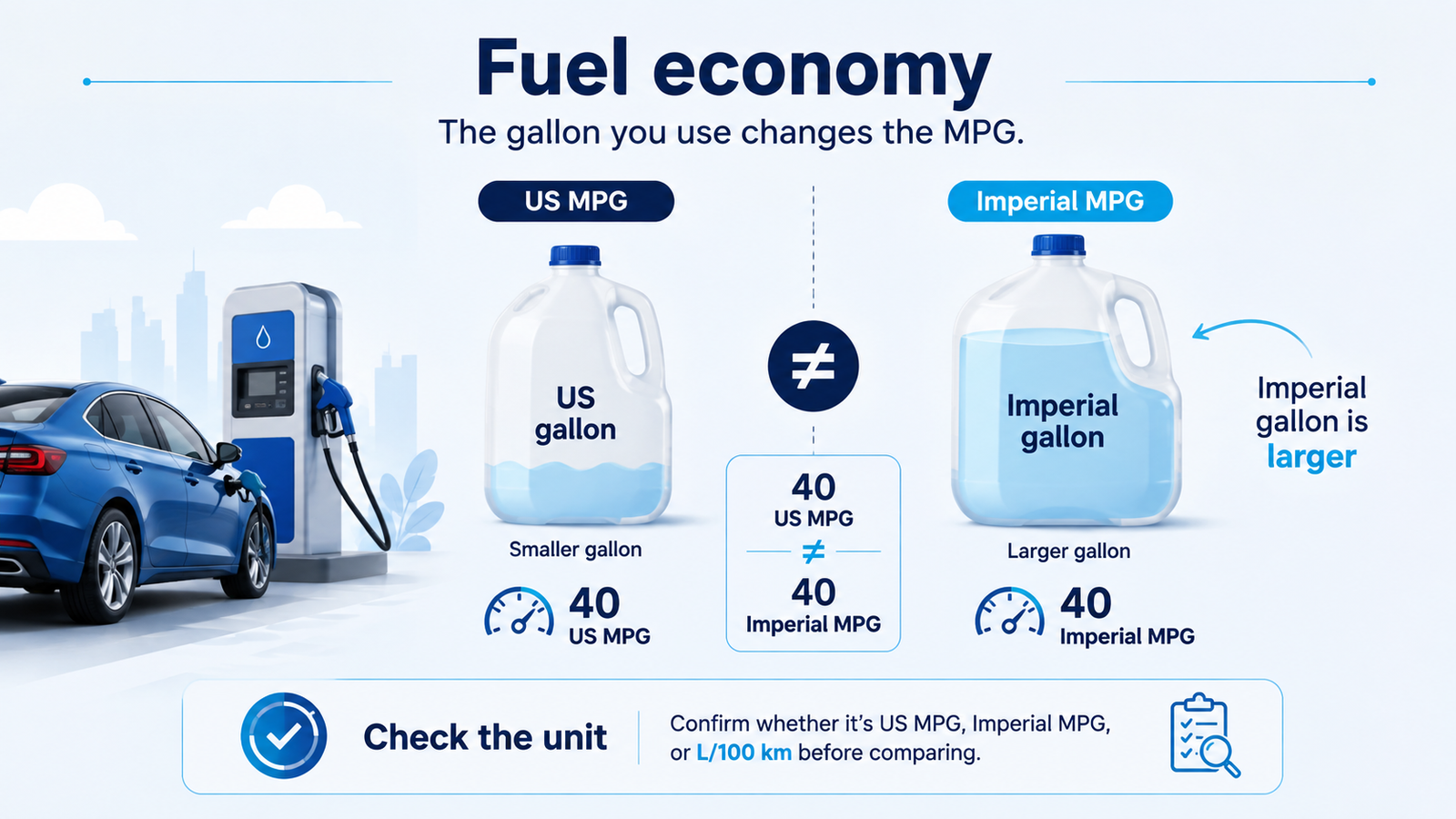
Miles per gallon figures are a common source of confusion. An Imperial gallon contains more fuel than a US gallon, so an MPG rating based on Imperial gallons will be numerically higher than a US MPG rating for the same vehicle and real-world efficiency.
For example, a car described as achieving 40 Imperial MPG is not automatically more efficient than one described as achieving 40 US MPG. The distance may be the same, but the Imperial figure is calculated using a larger gallon.
Quick MPG reminder
To compare fuel economy fairly, confirm whether the source uses US MPG, Imperial MPG, or liters per 100 kilometers.
Where each gallon is used
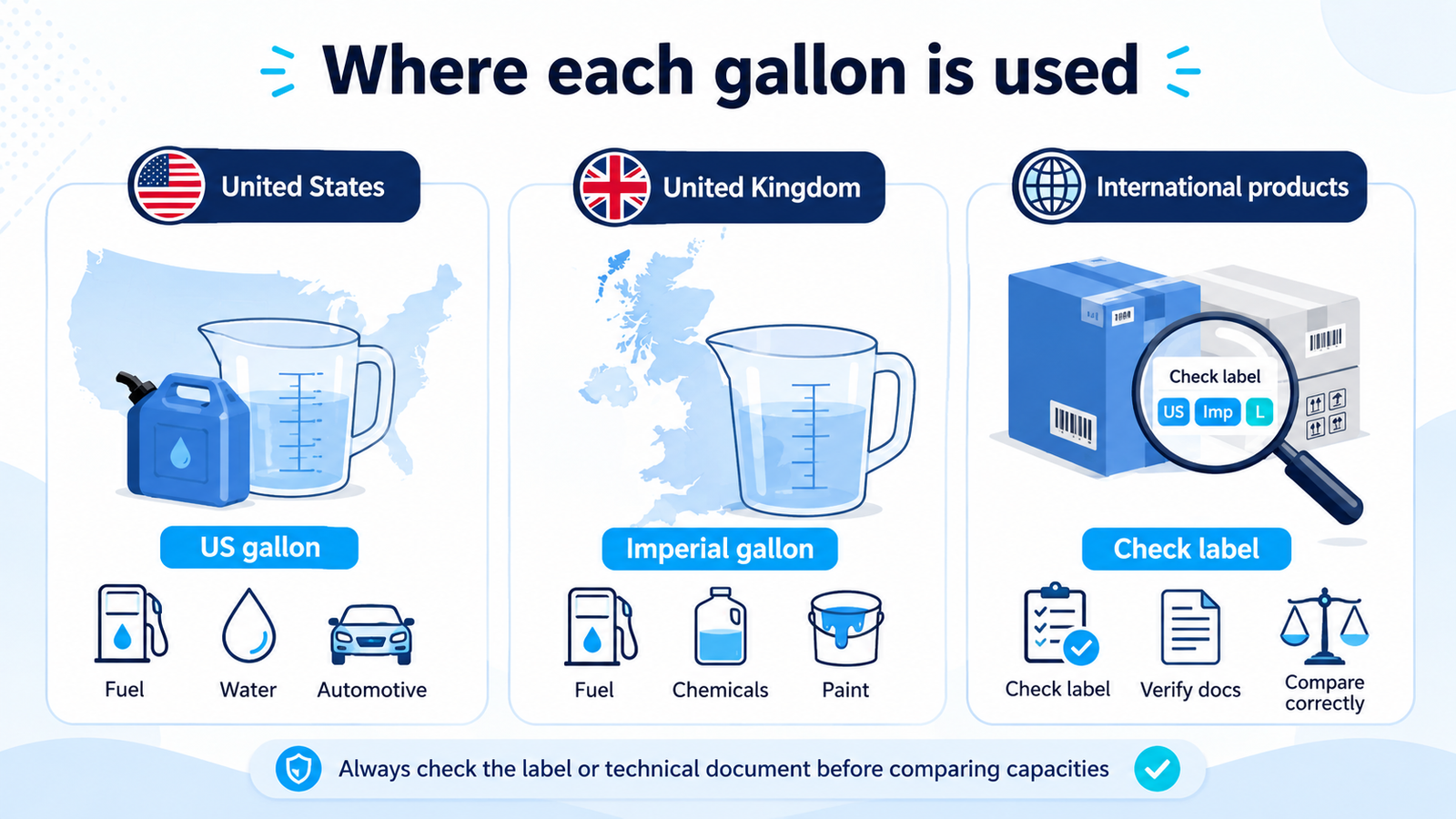
Usage varies by country, industry, and context. These broad guidelines help you identify the most likely standard, but a product label or technical document is always the best source.
- United States: the US liquid gallon is the normal consumer and automotive liquid-volume standard.
- United Kingdom: liters are used widely in daily trade, while Imperial gallons still appear in fuel-economy terminology and older or specialist references.
- International product listings: check whether “gal” is labelled US, Imperial, UK, or simply given in liters before comparing capacities.
Frequently asked questions
How many liters are in a gallon?
It depends on the system. One US liquid gallon equals 3.785411784 liters. One Imperial gallon equals 4.54609 liters.
How many US gallons equal one Imperial gallon?
One Imperial gallon equals approximately 1.20095 US gallons. In practical terms, one Imperial gallon is just over 1.2 US gallons.
Is a US dry gallon the same as a US liquid gallon?
No. The US dry gallon is a separate unit and is rarely needed for ordinary liquid conversions. For fuel, water, containers, automotive fluids, and most household uses, “US gallon” normally means the US liquid gallon.